Cooling industrial halls – which solution should you choose?
Comprehensive HVAC systems, from heating of production halls i heating of warehouse buildings, via ventilation of industrial halls, we have been designing and implementing effective cooling solutions for over 27 years.
Why is cooling an industrial hall such a challenge?
High temperatures in an industrial hall affect not only working comfort, but also:
- staff productivity,
- the durability and reliability of machinery,
- the quality of manufacturing processes.
Modern buildings, which are often of a lightweight construction and have low thermal mass, heat up more quickly, which further increases the need for efficient systems cooling of an industrial hall.
Hall cooling methods – a comparison of solutions
Air conditioning
How it works:
It is based on a refrigerant cycle (evaporator–compressor–condenser), which extracts heat from the air and releases it outside.
Technical specifications:
- high-precision temperature and humidity control
- the option to divide the premises into zones
- consistent performance regardless of external conditions
Disadvantages:
- very high energy consumption (compressors)
- high investment and maintenance costs
- dependence on refrigerants (GWP, EU regulations)
Ventilation
How it works:
It uses cool outside air to lower the temperature in the hall without the use of refrigeration units.
Pros:
- a reduction in energy consumption of up to >90%
- very low running costs
Disadvantages:
- it only works under favourable external conditions
Adiabatic cooling
How it works:
It utilises the phenomenon of water evaporation – the energy required to change the state of the water is drawn from the air, which cools it down in industrial facilities.
Key features:
- no compressor or refrigerant
- very low energy consumption
- simultaneous air filtration and humidification
Restrictions:
- dependence on air humidity
- less precise temperature control
Comparison of systems (table)
How much does it cost to cool an industrial hall?
Capital expenditure
- purchase of equipment,
- design and installation of systems,
- infrastructure (sewers, electrical installations).
The cost depends mainly on the size of the hall and the industrial cooling system chosen.
Running costs
The largest share is held by:
- electricity consumption,
- water consumption (in adiabatic systems),
- servicing and maintenance.
Compressor systems result in the highest energy bills, whilst adiabatic systems are among the cheapest to run.
Indirect costs
- production downtime,
- a decline in staff productivity,
- equipment failures.
Cooling of production halls – specific features and requirements
Production halls generate significantly more heat than typical commercial premises. In addition to solar radiation and thermal insulation, machines, furnaces, welding machines, paint booths and assembly lines all contribute to the rise in temperature. As a result, cooling of the production hall must take into account not only the building’s volume, but above all heat recovered from industrial processes.
Key factors to consider when designing a system:
- Height and volume of the hall — the taller the structure, the more difficult it is to lower the temperature evenly throughout the working area without adequate ventilation.
- Nature of production — in foundries, printing works or plastics moulding facilities, temperatures can exceed 35–40°C even in moderate weather.
- Zones with varying thermal loads — For workstations with high heat emissions, it is worth considering localised cooling or dividing the hall into zones.
- Health and Safety Requirements — Regulations and thermal comfort standards stipulate that the temperature in the work area should not exceed 28–30°C (depending on the type of work).
In practice cooling of production halls It is rarely based on a single technology. The most effective approach is usually a combination of mechanical ventilation and adiabatic cooling – a solution that lowers the temperature without the need for costly compressor units, whilst also providing the air exchange required for processes that emit dust, vapours or moisture.
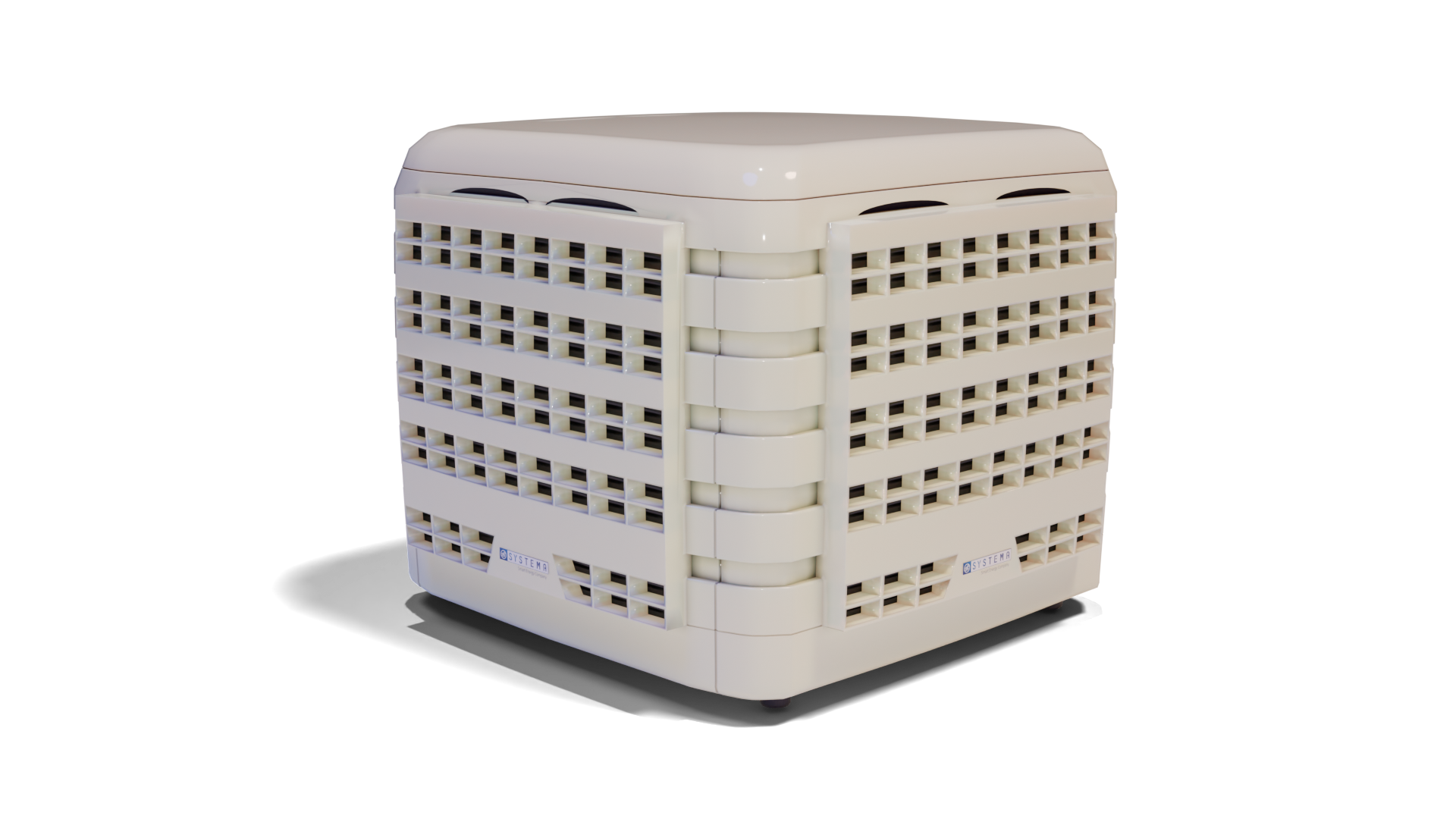
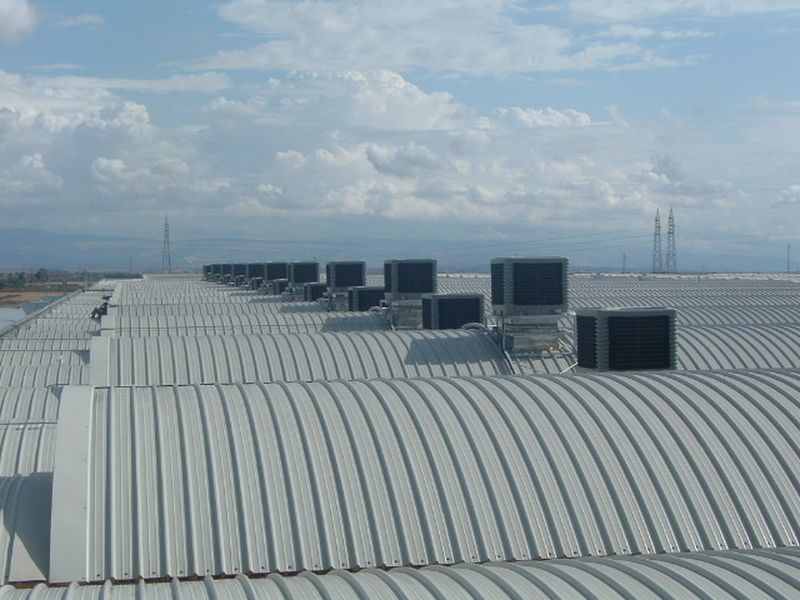
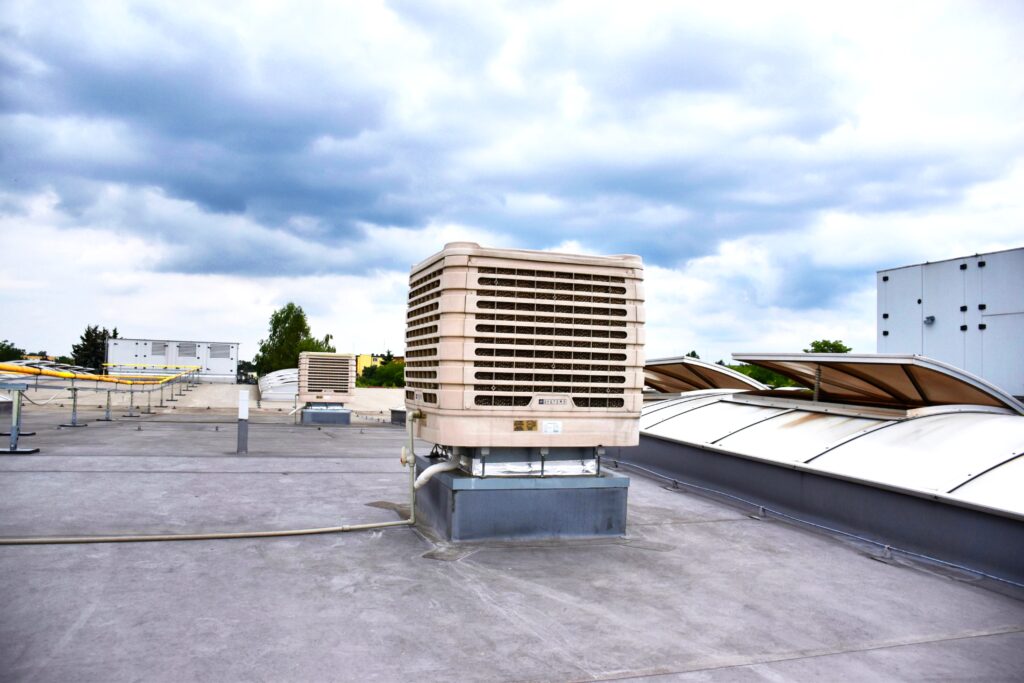
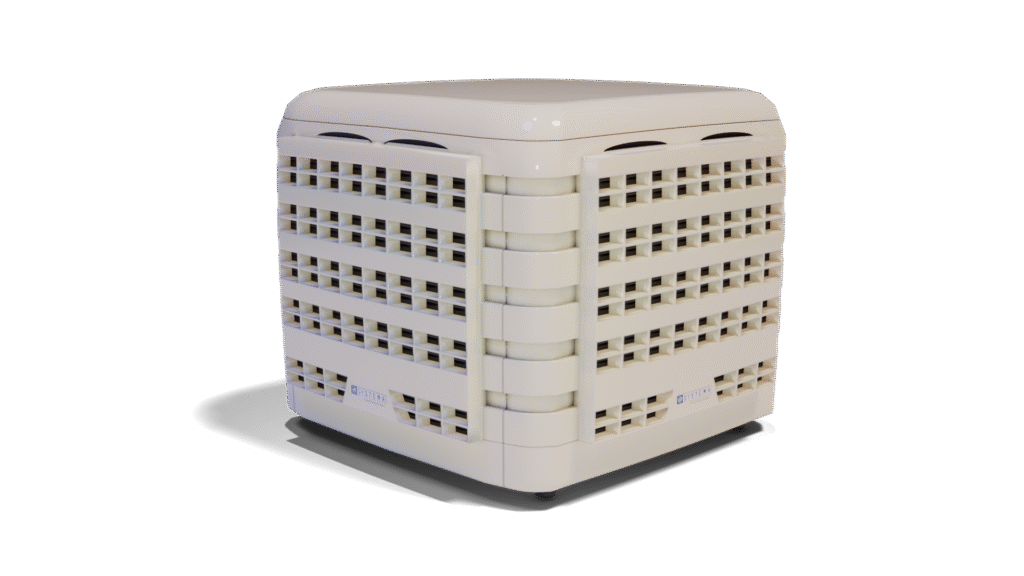
For halls with moderate heat gains and good extract ventilation, the FRESCO OK evaporative cooler can reduce the temperature by several–several degrees whilst keeping energy and water consumption low; this is often a sufficient solution without the need to invest in a full industrial air-conditioning system.
Cooling warehouse facilities – what do you need to know?
Cooling of warehouse buildings and logistics centres differs from that in production facilities. Here, the main objective is usually to ensure staff comfort during loading and order picking and — in certain cases — to protect temperature-sensitive goods. Although heat gains from machinery are lower, large glass surfaces, loading bays and frequent opening of doors can cause sudden rises in temperature on summer days.
The specific nature of cooling in warehouses and distribution centres:
- Large floor area, relatively low ceiling height — In warehouses with a height of 8–12 m, the temperature distribution is easier to control than in tall production halls.
- Gates and loading bays — every time the door is opened, hot air from outside enters; air curtains They minimise losses, but cannot replace a cooling system at the height of the season.
- Seasonal variations in demand — In logistics, peak temperatures occur in July–August; the system should be designed to cope with the worst-case scenario, not with average annual conditions.
- Operating costs — for areas of 5,000–20,000 m², the running costs of compressor-based air conditioning can be many times higher than those of evaporative cooling.
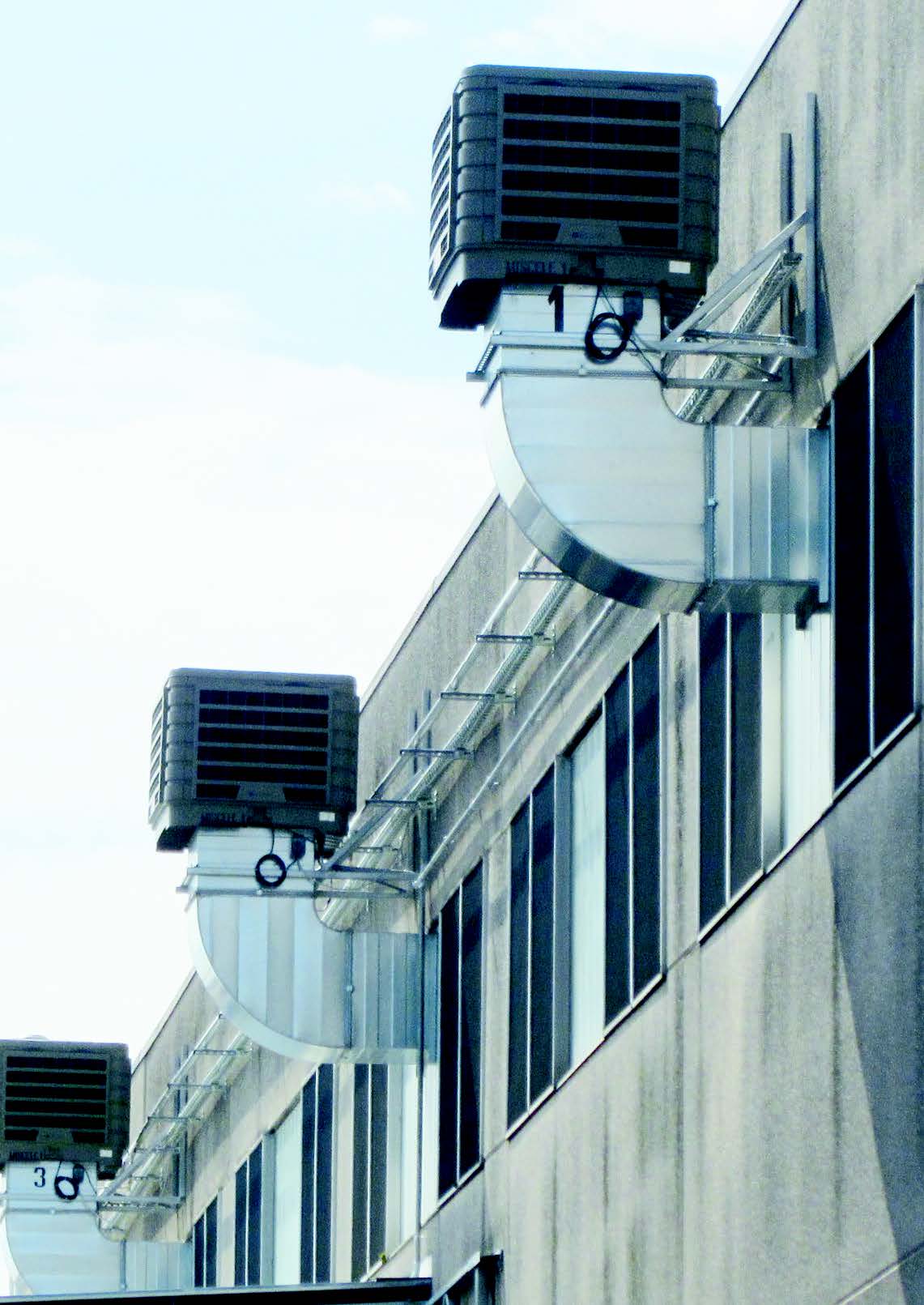
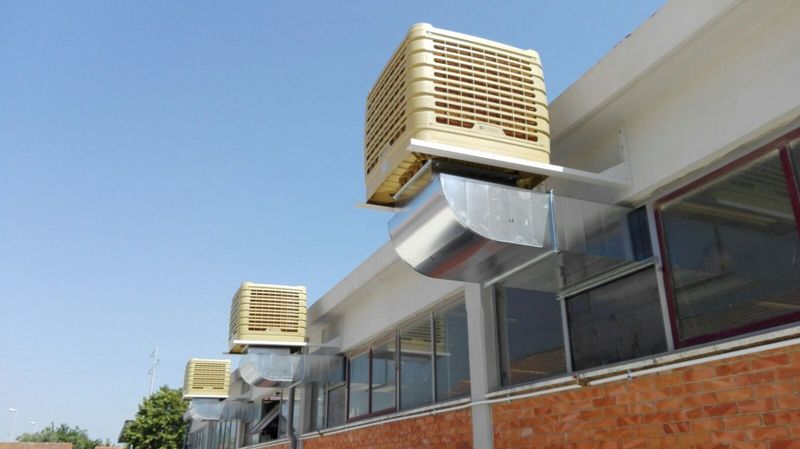
Cooling of the warehouse Based on adiabatic technology, it works particularly well in facilities where precise humidity control is not required (e.g. general warehouses, distribution centres, order fulfilment centres). Installed on a wall or the roof of a building, the cooler draws in hot outside air, cools it through the evaporation of water and feeds it into the building — whilst simultaneously filtering the air to remove dust and pollutants.
In warehouses where temperature-sensitive goods (food, pharmaceuticals, electronics) are stored, a case-by-case analysis is required: sometimes precision air conditioning is needed in specific zones, whilst evaporative cooling is required in the rest of the facility.
How do you choose a cooling system for a hall?
The choice of technology should take into account:
- the size and height of the hall,
- the nature of production,
- temperature requirements,
- capital and operating budgets,
- climatic conditions of the location. .
In practice The best results are achieved by combining several systems, e.g.:
- ventilation + adiabatic cooling,
- air conditioning + passive systems (insulation, sun-reflective films)
The most common mistakes in cooling design
Choosing the right cooling system for a production hall is not just a matter of staff comfort, but also of the stability of production processes, operating costs and the facility’s energy efficiency. In practice, investors and contractors very often make mistakes as early as the design stage or when selecting equipment. The consequences include: overheating of the hall, high energy bills, excessive humidity or inadequate ventilation.
The most common mistakes are:
- Selecting equipment based on the hall’s floor area;
- Failure to take account of heat recovery from technological processes;
- Lack of adequate ventilation during cooling;
- Incorrect positioning of equipment;
- Failure to take air humidity into account;
- No division into zones;
- Lack of regular servicing.
When is it worth commissioning a project from a company?
In many industrial projects, the decision on which cooling system to choose is based solely on the price of the equipment or on simplified calculations. This is one of the main reasons for subsequent operational problems: overheating of the hall, high energy costs or inadequate ventilation inside the hall.
A professional cooling design is essential wherever the installation has a tangible impact on:
- technological process,
- working comfort,
- energy consumption,
- production safety,
- the plant’s operating costs.
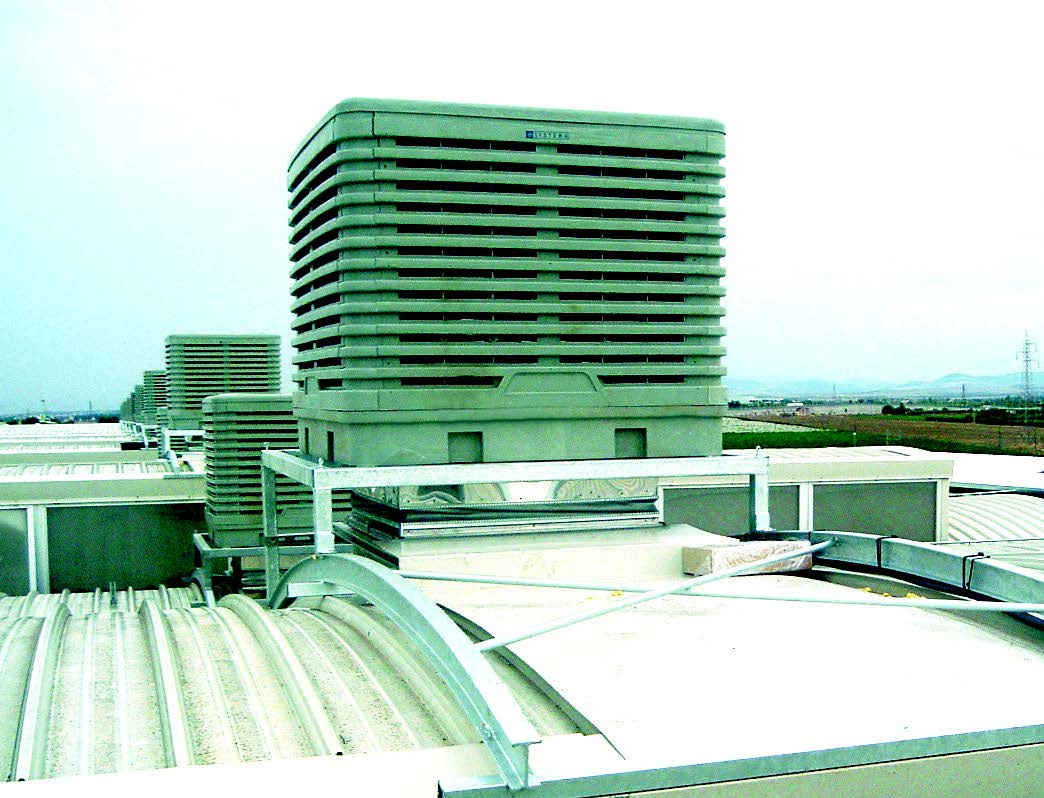
FRESCO OK evaporative cooler – a solution from Systema Polska
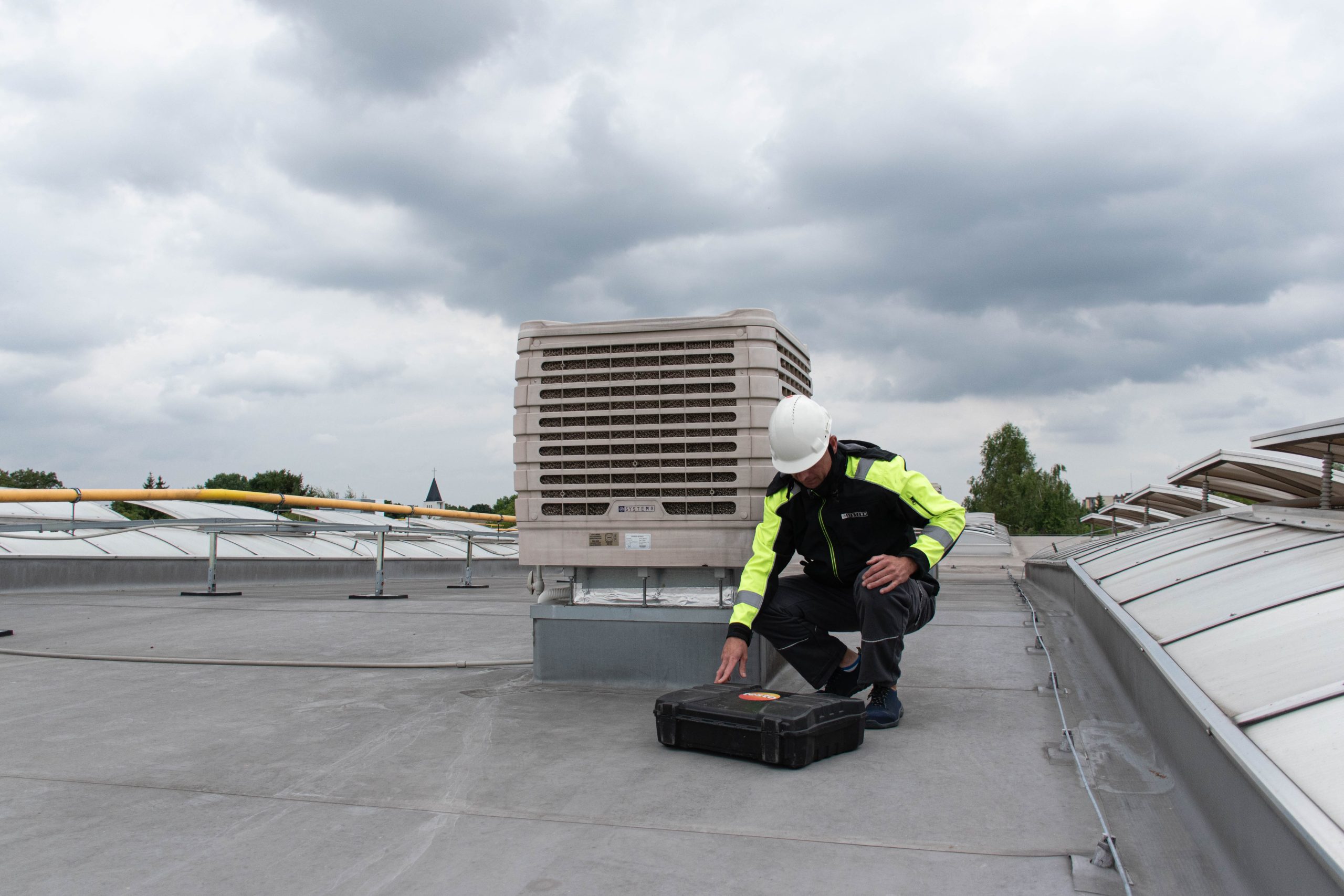
Evaporative cooler FRESCO OK Installed outside buildings. An axial fan draws in hot outside air, which is then distributed through the cellulose panels. As a result of adiabatic evaporation, the air temperature is lowered, and the air is then transported to the building being cooled by the fan. The humidity of the panels is maintained by special nozzles designed to distribute water, the level of which is kept constant by topping up. In addition, the cellulose panels act as air filters.
Frequently Asked Questions
Will adiabatic cooling work in every hall?
How much does it cost to cool a hall with an area of 2000 m²?
How does hall cooling differ from industrial air conditioning?
Is it possible to combine adiabatic cooling with ventilation?
When is it a good idea to book a free cooling audit?
Free consultation – choose the right cooling system for your hall
Długa street 5, 98-220 Zduńska Wola
NIP: 829-150-55-41
REGON: 730918997
KRS: 0000102157
Monday to Friday
from 7:00 a.m. to 3:00 p.m.
Fill in the form