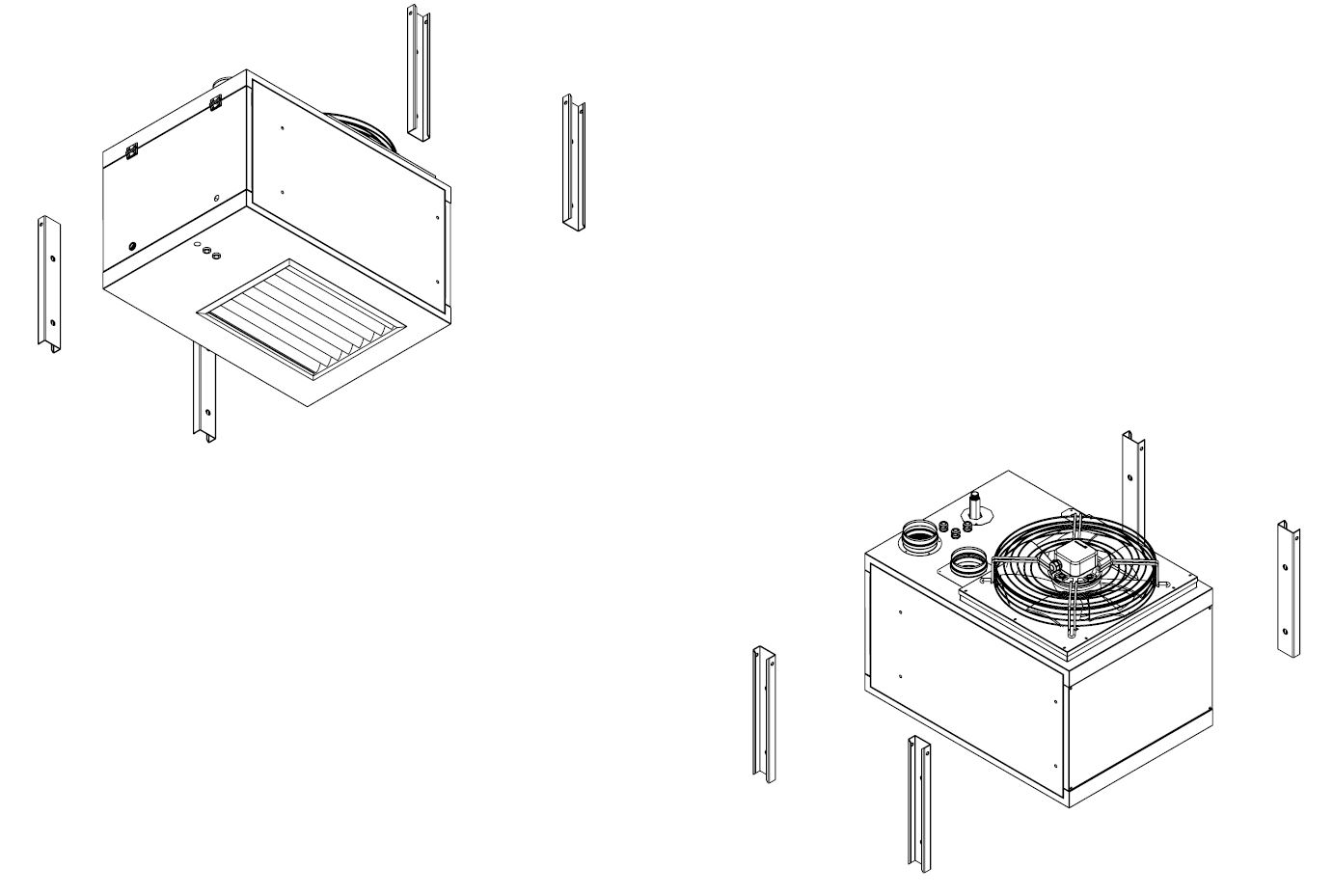
How does the PREMIX Industrial Gas Heater with Burner work and what are its main advantages?
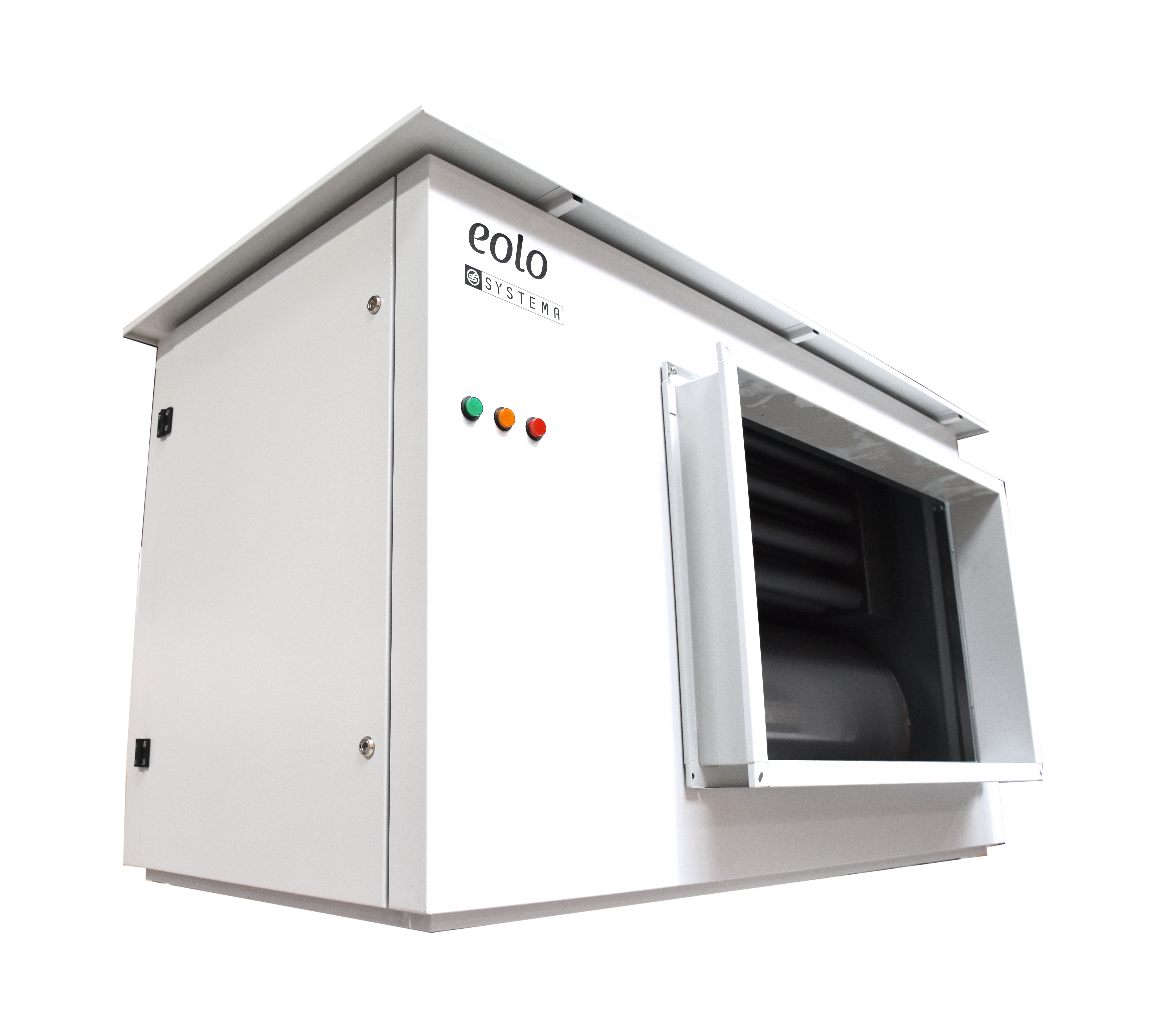
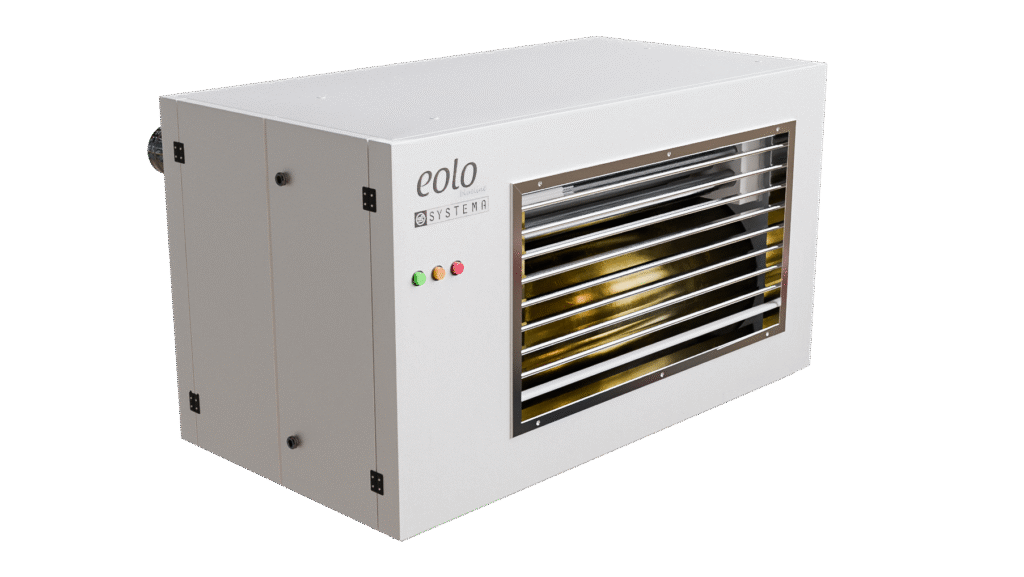
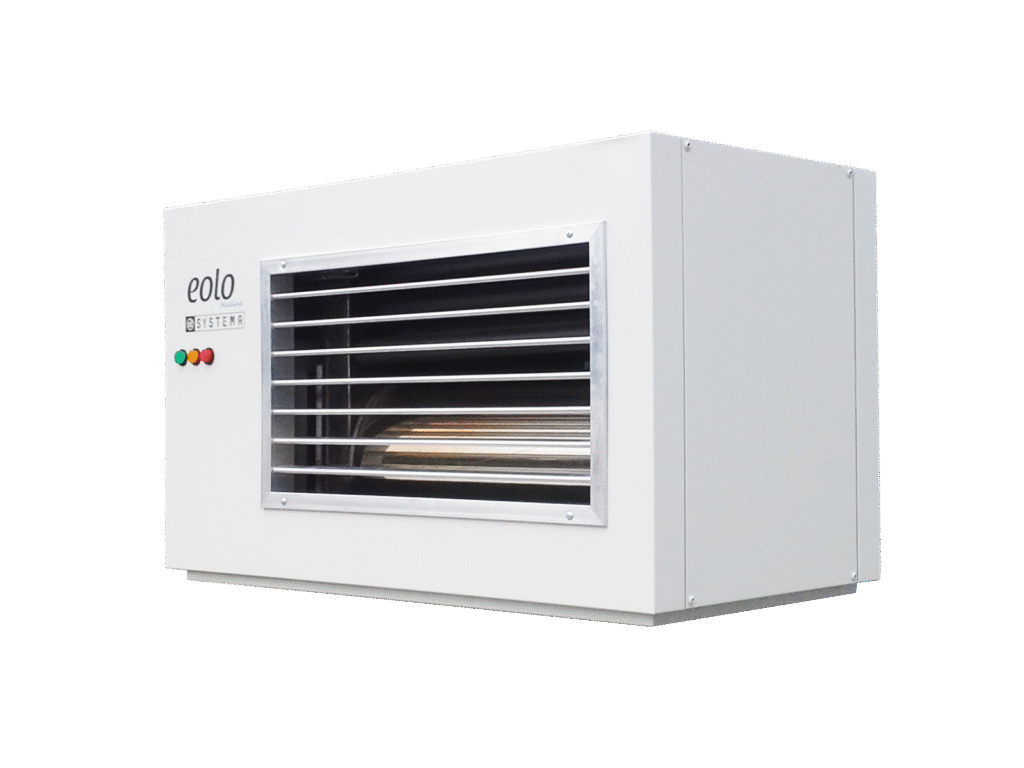
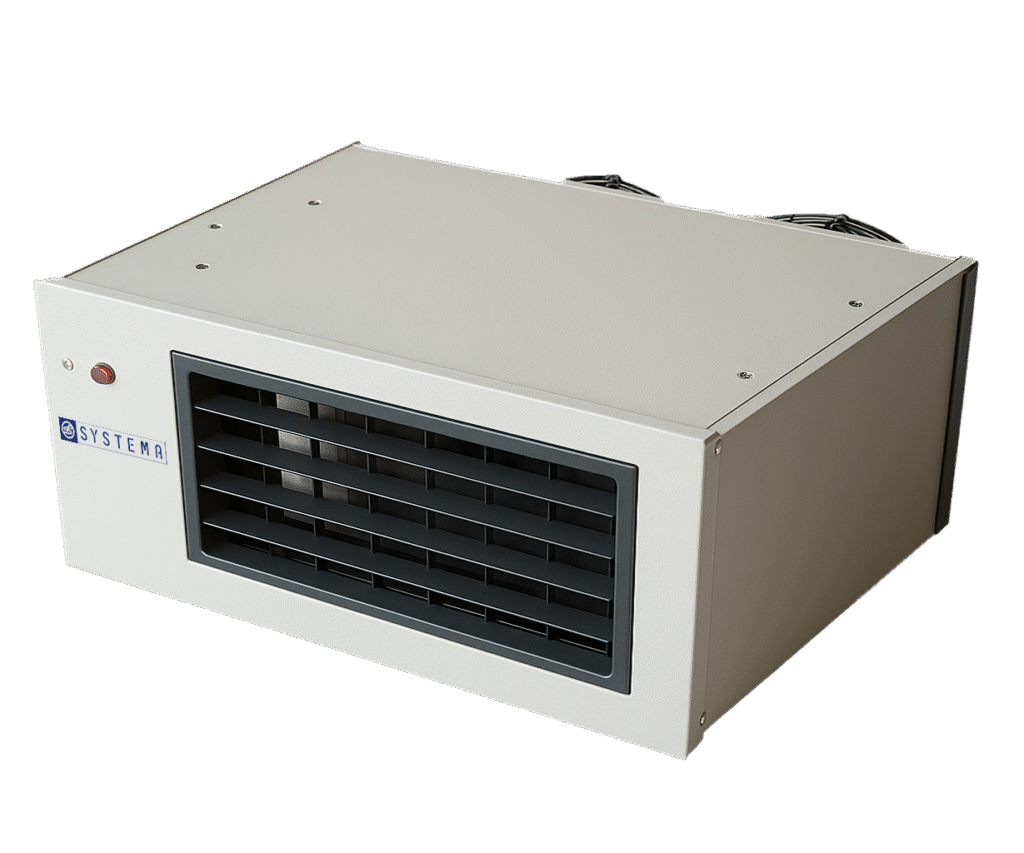
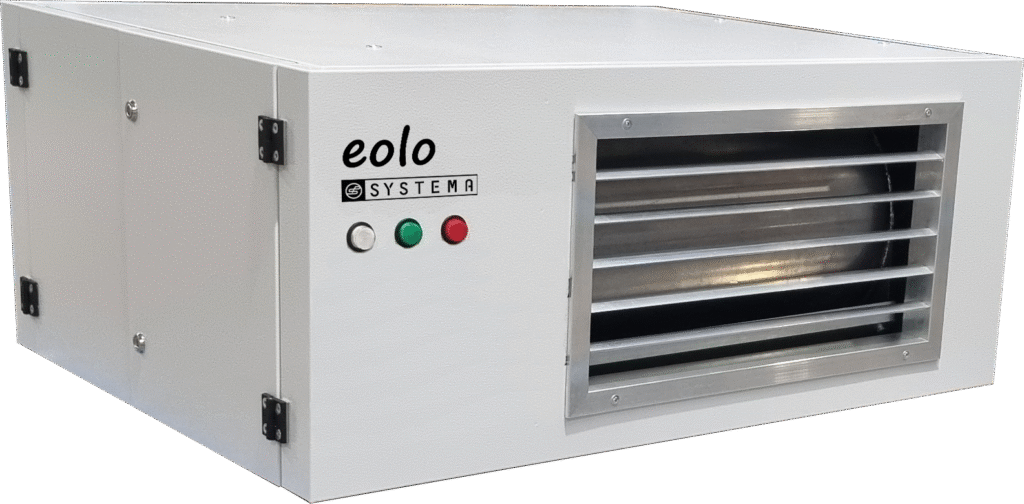
Gas heater is an advanced appliance at the heart of which is the modern, modulating PREMIX burner. It works by pre-mixing the gas and air perfectly even before it enters the combustion chamber. This makes the combustion process extremely clean and efficient. A powerful fan draws in cold air, which flows through an innovative heat exchanger, where it is rapidly heated by the flame. The warm air is immediately blown into the room, providing fast and efficient heating. This type of heater is particularly appreciated in industrial applications, for example for the heating of large volumes such as the hall storage or production.
The main advantages of PREMIX technology in gas heaters are:
- Unparalleled efficiency: Thanks to heat recovery from condensation of water vapour from flue gases (in BC condensing models), the efficiency of the units at minimum load reaches as high as 105%. This means that virtually all the energy from the gas is converted into heat.
- Superior ecology and safety: Combustion is so perfect that carbon monoxide emissions are zero (CO = 0 ppm), emissions and nitrogen oxide emissions meet the standards of the highest, class 5. (NOx < 30 ppm). It is a guarantee of safety for workers and a concern for the environment.
- Intelligent power modulation: The PREMIX burner continuously regulates the power in a range of 30% to 100%, by adjusting it to the current heat demand. This prevents overheating and significantly reduces gas consumption.
- Quiet operation: The use of this type of burner and high-efficiency fans makes EOLO heaters extremely quiet.
Gas Heater with or without Flue Gas? Safety in Industrial Facilities.
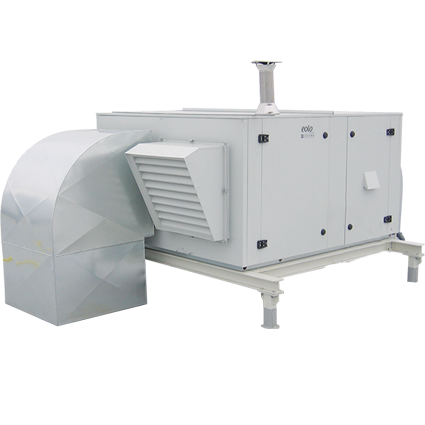
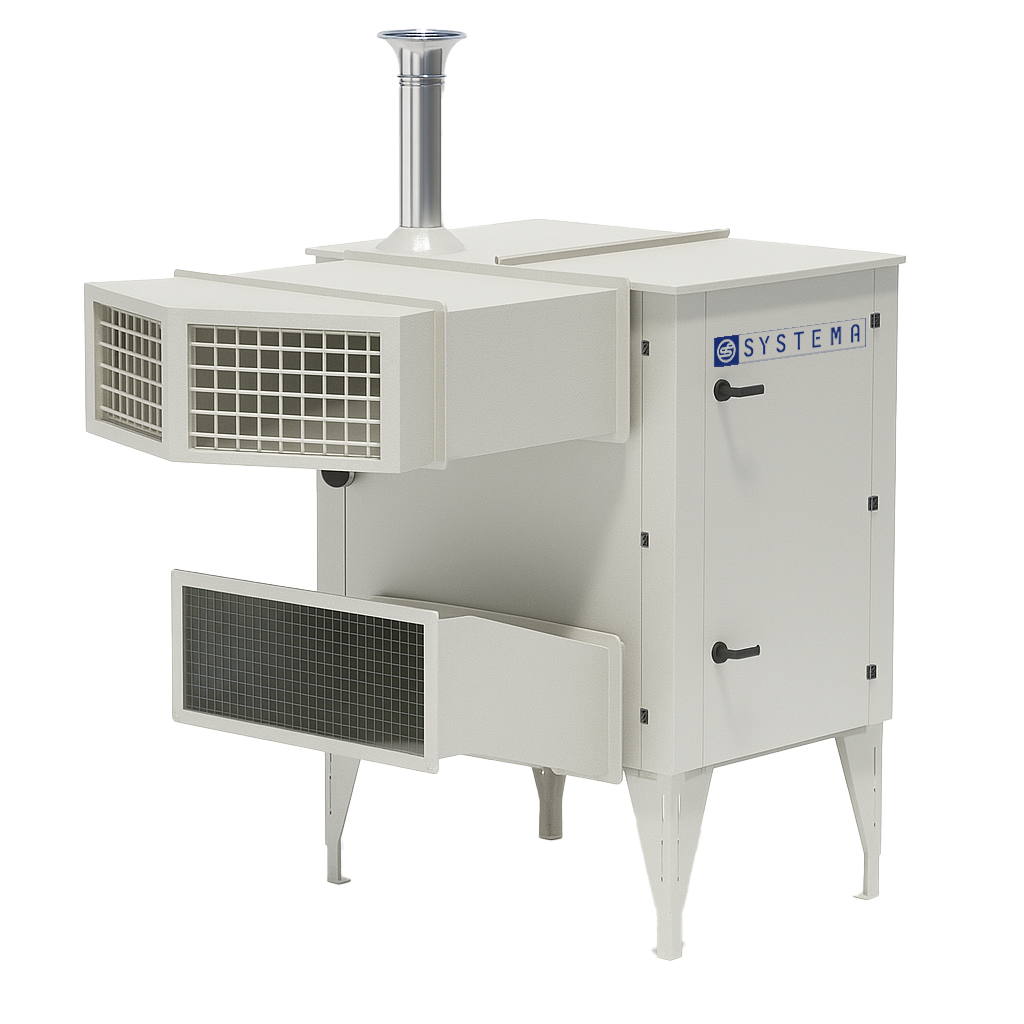
One of the most important criteria for the selection of an industrial gas heater is how it deals with the products of combustion. Gas heater with exhaust is a solution for the highest levels of safety and comfort. It has a closed combustion chamber and a special chimney (duct) that discharges all the exhaust outside the building. Only clean, warm air enters the room in the 100%. This type of heater is the only right choice for places where people are permanently present, such as workshops, warehouses or production halls. It guarantees safe working conditions and is the standard in modern industry.
The flueless models, although simpler in design, introduce the products of combustion into the room to be heated. For this reason, they require very good ventilation and can only be used in areas with a large volume and a constant supply of fresh air, such as open construction sites or partially open halls.
How to precisely select the power (kW) of a gas-fired heater for the volume of a hall?
Choosing the right heating output, expressed in kilowatts (kW), is absolutely key to ensuring efficient heating. Too little heater will not be able to achieve the desired temperature, and an oversized one will generate unnecessarily high costs. In order to accurately select heater with power suitable for the building in question, the volume of the room (length x width x height), the degree of insulation of the building and the required temperature difference must be taken into account.
There is a simplified formula to estimate the required power: V x ΔT x K = kcal/h, where V is the volume, ΔT is the temperature difference and K is the insulation factor (ranging from 0.6 for well-insulated buildings to 4.0 for open spaces). The result in kcal/h must then be divided by 860 to get the required output in kW. For example, for a 200 m² hall with a height of 5 m (volume of 1,000 m³), with average insulation (K=2.0) and the need to raise the temperature by 20°C, the requirement would be approximately 46.5 kW. Always worth consult a specialist, which will help you select the ideal model from a wide range of outputs from 16 kW to 103 kW.
Gas Heater Operating Costs - The Most Economical Heating for Your Business?
For any entrepreneur, costs are a key consideration. In the case of industrial hall heating, gas heater is the clear leader in terms of economy of use. The main factors are:
- Efficiency to 105%: This means real, measurable savings on gas bills compared to older appliances with lower efficiency.
- Power modulation 30-100%: The appliance uses exactly as much gas as is needed at any given time, without wasting energy.
- Fuel price: Gas (propane-butane or natural gas) is usually much cheaper per unit of energy (kWh) than electricity. Although electric heater may be cheaper to buy, its running costs when heating a large volume will be many times higher.
Compared to oil-fired heaters, gas models with a PREMIX burner offer cleaner combustion, which translates into less maintenance. Investing in an efficient gas heater So it pays for itself very quickly in the form of lower heating bills.
Master Portable Gas Heaters - Flexibility and Efficiency in Industry.
Brand Master has been a market leader in mobile heating solutions for years and its products are synonymous with durability, efficiency and safety. Portable gas heater of this brand is the ideal tool for construction companies, workshops, agriculture or warehouses. Thanks to its compact design and optional mounting kits, it can be easily installed and positioned exactly where heat is needed at any given time. This eliminates the need to install costly, stationary systems heating, especially in facilities that are in temporary use or where there is a need to heater rental.
Master heaters are designed for intensive use in harsh environments. A robust metal casing, heavy-duty components and advanced security systems come as standard. When choosing professional heaters Master, you gain not only powerful heating power, but also mobility, which allows you to zone heating of workplaces, defrost machines or dry specific areas, which guarantees rapid and efficient heating with minimal energy consumption.
Application of Gas Heaters in Various Sectors of Industry and Construction
The versatility of gas heaters means that they are used in almost every industry.
- Production halls and warehouses: They ensure that they maintain the constant, positive temperature necessary for the storage of goods and the comfort of the crew.
- Automotive workshops and services: They enable large and frequently opened rooms to be heated quickly, which is crucial in the autumn/winter season.
- Construction: They are indispensable for drying plaster, floors and for heating construction sites, allowing work to be carried out regardless of weather conditions.
- Agriculture: Used for heating greenhouses, poultry houses or sorting plants.
- Events and outdoor events: They effectively heat tents and event halls.
In each of these applications gas-fired air heater proves its superiority with a combination of power, mobility and low running costs. It is a reliable tool that supports work continuity and regular service guarantees that the device will last for many years.
Summary - key information:
- Gas heaters are the industry standard: They offer the best ratio of power and efficiency to running costs, ideal for heating large halls.
- Safety is key: In areas where people are permanently working, it is imperative to use flue models that provide 100% with clean, warm air.
- Precisely select the power (kW): Use the formula or expert advice to select the unit according to the volume and insulation of the building, avoiding energy loss.
- Bet on the economy: The lower price of gas compared to electricity makes gas heaters the most cost-effective solution for heating large areas.ą trch „heat islands” in specific work zones, without having to heat the entire, huge volume. This translates into huge savings and increases efficiency plant energy. Reliability and regular service is the basis for continuity of work in many industries.
How do you ensure that large spaces are heated efficiently and economically all year round?
Delivering optimum temperature in large facilities in a way that is both efficient and cost-effective requires a considered strategy. The key is flexibility and choosing the right tools. Rather than relying on a single, central system, it makes sense to rely on diversified solutions that can be tailored to current needs. The basis is choosing the right type of equipment. For permanent heating of the hall, a system based on water heaters may be ideal, while for intervention work, zone heating or temporary use, a mobile unit is indispensable. heater internal combustion engine or electric heater.
The secret is intelligent management of the power and location of heat sources. The use of thermostats allows the set temperature to be maintained automatically, preventing overheating and wasting energy. Using portable heaters allows heat to be delivered exactly where it is needed, which is much more economical than heating an entire space. It is worth considering having several types of unit - for example, a large oil heater for the main heating and several smaller ones electric air heaters for special tasks. Such a strategy, supported by reliable and efficient equipment such as modern heaters brands Master, ensures thermal comfort and cost control all year round.
Summary - key information:
- Select the type of heater for the application: Gas and oil ones are ideal for large, well-ventilated spaces because of their power and low running cost. Electric ones work well in smaller, less ventilated spaces where the absence of exhaust fumes is important.
- Choose wisely between flue and non-flue versions: For places where people work permanently, choose only models with an exhaust, guaranteeing 100% clean air.
- Power (kW) matters: Precisely calculate the heat demand, taking into account the volume, insulation and required temperature to avoid underheating or unnecessary costs.
- Opt for mobility: The portable heater allows flexible and zonal heating, which is extremely economical and practical in dynamic working environments.
- Safety is a priority: Always ensure adequate ventilation when using combustion heaters and regularly check the condition of the equipment.
- Choose trusted brands: Investing in professional heaters such as Master is a guarantee of reliability, high performance and a long service life for the unit.
- Understand the technology: Differentiate between air heaters (stand-alone heat sources) and water heaters (components of a central heating system) to match the solution to the existing infrastructure.