Systema Polska

In winter, the same scene is often repeated in a high-ceilinged hall: staff are freezing near the floor, whilst the thermometer under the roof reads a dozen or so degrees higher. The heating is running at full power, but much of the heat accumulates in the upper parts of the building and escapes through the ceiling. Destratification It is a way of recovering that heat and channelling it to where it is needed – to the areas where people spend their time.
In this guide, we explain what a destratifier is, how it works, where it is used, at what height destratifiers are installed, and what factors determine how much you can save by using them.
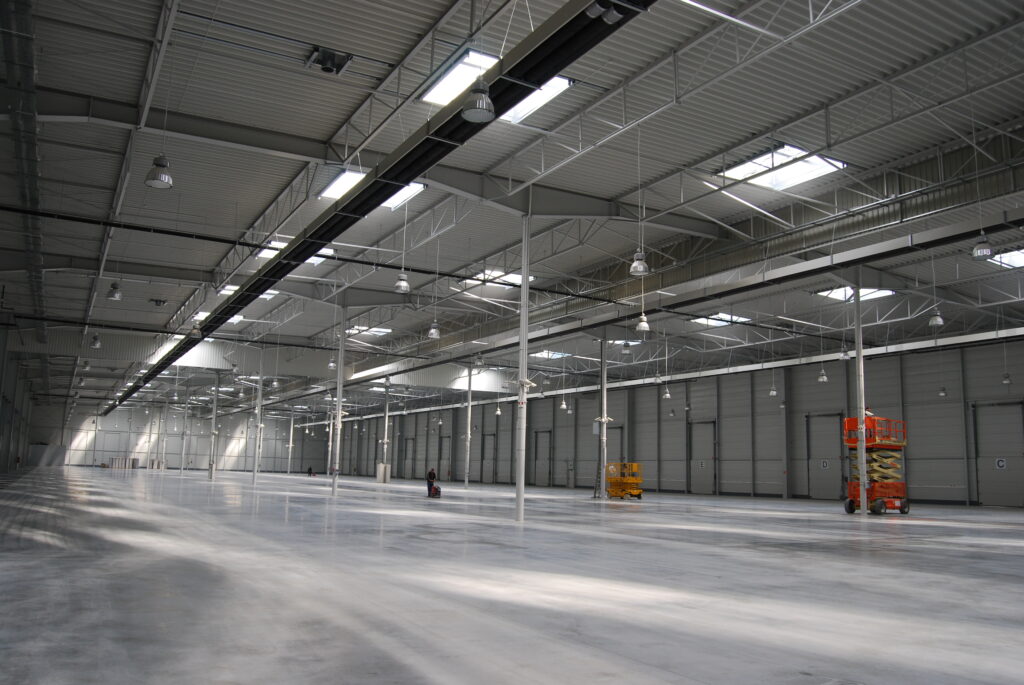
The rise of warm air is a natural phenomenon – warm air is lighter than cold air. In a low-ceilinged room, this difference is negligible, but in a hall with a height of 8, 10 or 15 metres, a distinct temperature stratification (stratification). It can be considerably warmer under the roof than in the working area, and the excess warm air in the upper parts of the hall increases heat loss through the roof and ceiling. The higher the room, the greater the difference in air temperature between the ceiling and the floor – which is why this problem primarily affects halls and other high-ceilinged rooms.
Air destratification involves levelling out this difference: warm air from beneath the ceiling is directed back downwards, and the air temperature throughout the space becomes more uniform. The effect is particularly noticeable with forced-air heating, where the heater blows out warm air, which then rises rapidly.
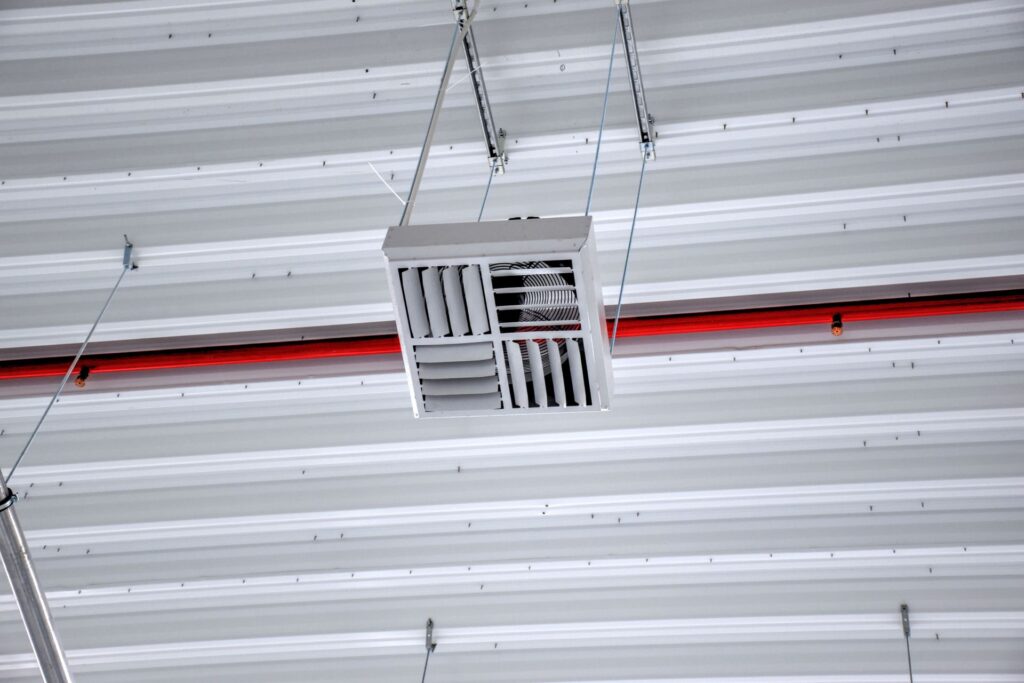
Destratiator (also known as a destratification fan, or colloquially as an air mixer) is a device fitted under the roof of a hall, which draws in warm air from the upper parts of the room and directs it downwards in a vertical stream. The design is simple: an axial fan, a housing and an air outlet grille with adjustable louvers (the louvers control the direction of the airflow), whilst a thermostat is used to control its operation.
An industrial destratification fan differs from a domestic ceiling fan primarily in terms of its capacity and the range of its airflow. In tall buildings, it must direct the flow of warm air towards the area where people are present, which is usually 2–4 metres above the floor – only then does the air temperature in the working area actually rise. For example, the DS destratifiers manufactured by Systema Polska feature fans with diameters ranging from 400 to 800 mm and air flow rates from approximately 4,400 to 19,000 m³/h, depending on the model.
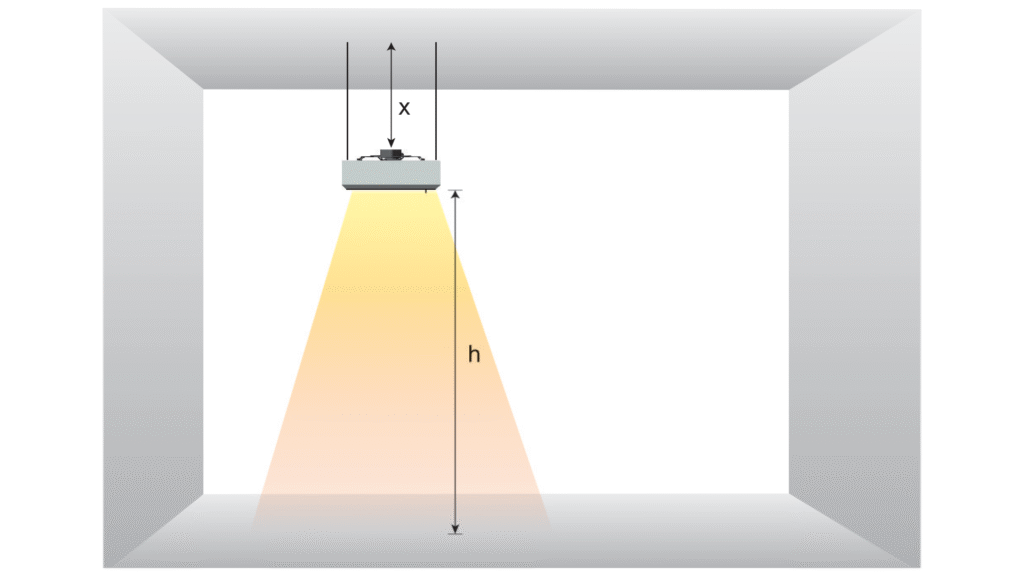
The principle behind it is simple:
A destratifier is not a heat source – it utilises heat that has already been generated. It therefore operates independently of the heating system: it works in conjunction with other heating appliances – such as gas heaters, infrared radiators or heating and ventilation units. A water heater connected to the boiler room can also serve as a heat source. In every case, the destratifier increases the efficiency of the heating system by improving air circulation within the rooms.
Their main application is in tall, heated buildings – as the temperature difference is greatest in such spaces. Destratification units are ideal wherever heat accumulates near the roof and people work at ground level:
At gas heaters The destratifier maintains an even temperature distribution throughout the hall. With gas heaters It often allows for the use of fewer heating units. In warehouses with frequent traffic through the gates, it is worth combining it with air curtains, which minimise heat loss at the entrances – you can read more about this combination on the page about heating of warehouse buildings.
The scale of the applications is well illustrated by the delivery to P3 Logistic Park in Kąty Wrocławskie, where, in addition to radiant heaters and fan heaters, 109 destratifiers were installed in one of the halls.
The choice depends primarily on the installation height, the volume of the hall and the layout of the workstations. The manufacturer specifies, for each model, the height range within which the unit effectively delivers warm air to the occupied zone. Below is a summary for DS destratifiers:
| Model | Fan diameter | Air flow | Mounting height | Max. power. |
|---|---|---|---|---|
| DS 400 | 400 mm | 4,400 m³/h | 5–8 m | 180 W |
| DS 500 | 450 mm | 5,500 m³/h | 6–12 m | 245 W |
| DS 600 | 500 mm | 6,000 m³/h | 7–13 m | 420 W |
| DS 800 | 550 mm | 8,260 m³/h | 8–15 m | 500 W |
| DS 1100 | 2 × 450 mm | 11,000 m³/h | 10–15 m | 490 W |
| DS 1400 | 710 mm | 12,000–14,000 m³/h | 9–16 m | 910 W |
| DS 1900 | 800 mm | 15,000–19,000 m³/h | 10–18 m | 1 230 W |
When choosing where to install it, it is worth bearing in mind a few guidelines:
The effect depends on the height of the hall, the type of heating and the extent of the temperature difference between the ceiling and the floor. In halls over 8 m high, the DS destratifier can reduce heating costs by 20–30% – this is a practical way to reduce energy consumption for heating without replacing the heat source. In lower buildings and where the temperature stratification is minimal, the savings will be smaller – so before you buy the equipment, it is worth measuring the temperature near the roof and at floor level, or commissioning a simple audit.
Destratification has another advantage: it is one of the quickest ways to improve the efficiency of an existing system without having to rebuild it. It is often sufficient simply to add destratifiers to the existing heating system, rather than replacing the heat source.
If you’re planning to destratify your hall before winter, take a look at our a promotion on DS destratifiers: When you buy five devices, you’ll get the sixth for 1 zł. The offer is valid until the end of November 2026, subject to the terms and conditions. You can find the specifications and documentation on the website DS destratifier.
This is a fan fitted beneath the hall’s roof, which directs warm air from the upper sections back into the occupied zone. It evens out the temperature in tall buildings and reduces heat loss through the ceiling.
No, the destratifier does not generate heat. It circulates the warm air supplied by the heating system, thereby making the heating system work more efficiently.
This depends on the model – for DS destratifiers, the range is from 5–8 m for the smallest model to 10–18 m for the largest. The unit is installed beneath the ceiling, where the warmest air accumulates.
Provided the installation height and position of the louvres are correctly selected, the airflow reaches the working area without any unpleasant draughts. A noticeable draught usually occurs when the unit is mounted too low in relation to its capacity.
In summer, a destratifier can help to improve air circulation in the hall, but it is no substitute for cooling or air conditioning. Cooling systems, such as evaporative coolers, are used to lower the temperature during hot weather, whilst air exchange is provided by ventilation of industrial halls.
No. A destratification unit mixes the air inside the hall, but does not supply fresh air from outside. Ventilation and destratification are two different functions – in a well-designed hall, the two systems complement each other.
Not sure how many destratifiers your hall needs, or at what height to install them? Send us the dimensions of the building, the ceiling height and details of your current heating system – our technical advisers will prepare a selection and a quote. Contact us or use the form on the website DS destratifier.