Air curtains for industrial buildings – how can heat loss at doors be reduced?
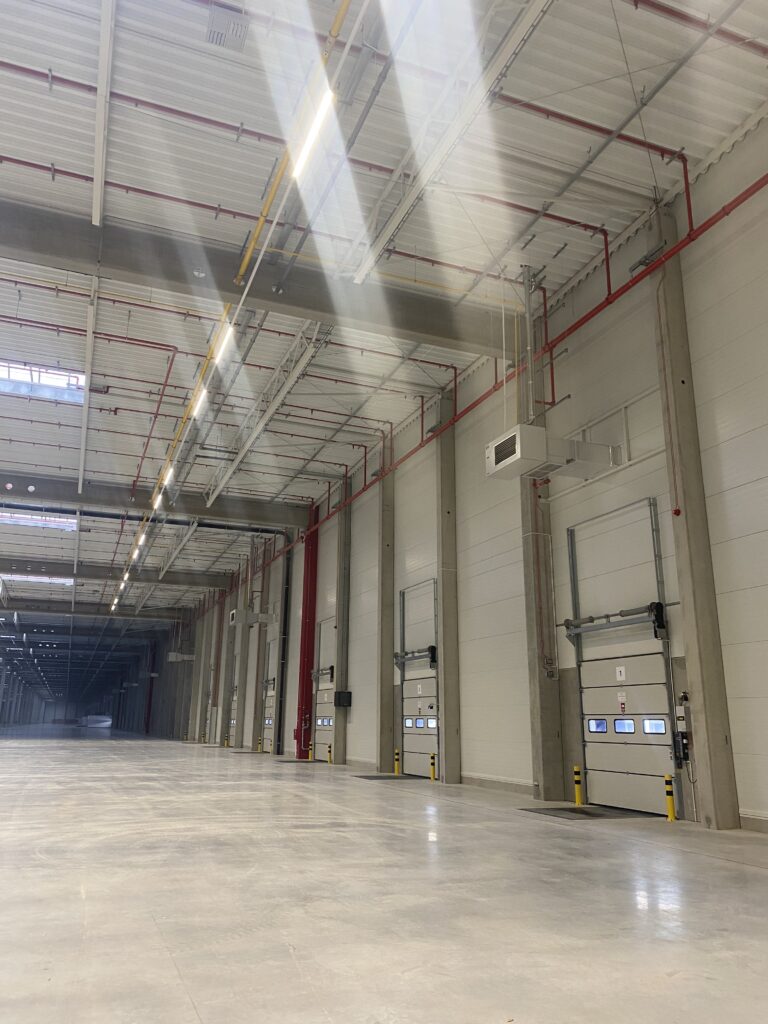
Air curtain above the gate

Lower heating bills
Comfort at ramps and docks
Are these the sort of problems you encounter with hall doors in day-to-day operations? The SV curtain is the tried-and-tested solution.
Problem: Every time the door is opened, the temperature in the loading area drops sharply.
Problem: Draughts near loading bays reduce working comfort and may affect temperature-sensitive goods.
Problem: Heating the hall alone does not solve the problem of heat loss when the door is open — energy escapes outside.
Why is an air curtain essential in an industrial hall?
A typical warehouse or logistics centre has numerous gates and docks, working areas around the ramps, and peak heat loss from October to March. Without an SV air curtain, every time a gateway is opened, the entire space has to be reheated — gas costs rise and the comfort of order picking is reduced. An air curtain for an industrial hall is installed above a door or in a recess — a stream of air (optionally heated) creates a barrier separating the interior from the exterior. In production halls, SV air curtains protect workstations near forklift access points; in logistics, they protect goods that are sensitive to draughts and low temperatures.
Air curtain methods for industrial halls – a comparison of solutions
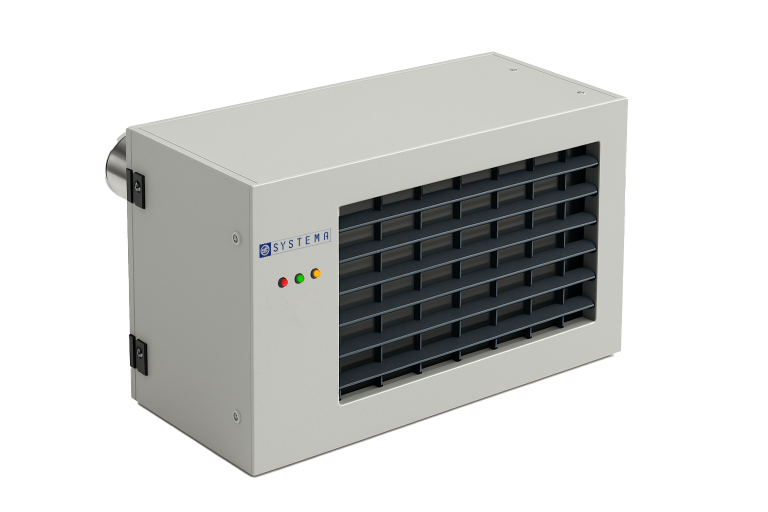
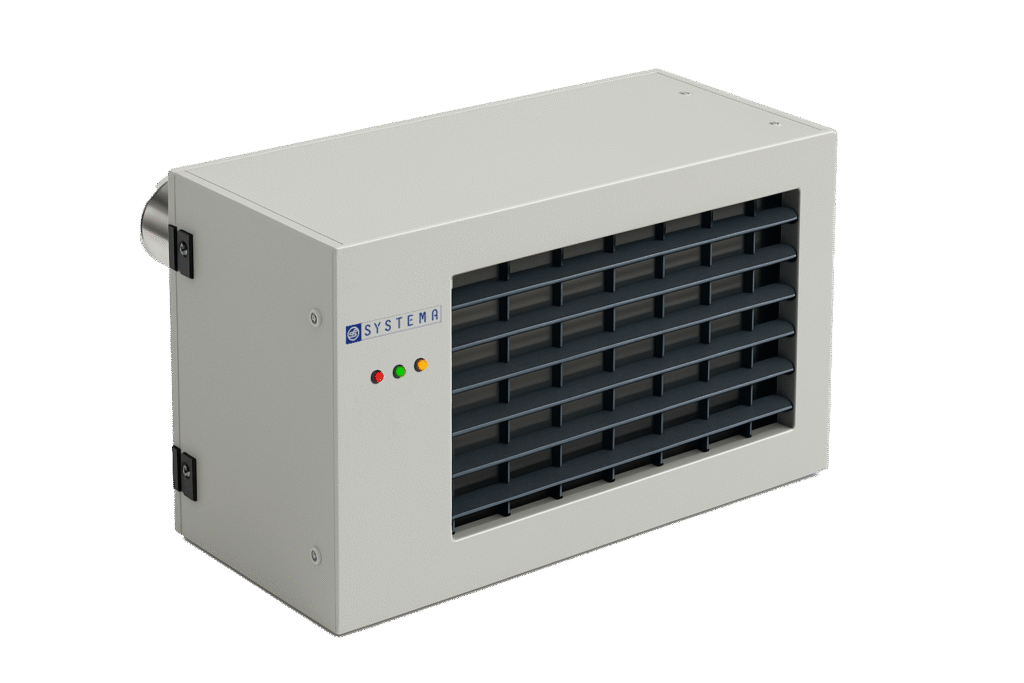
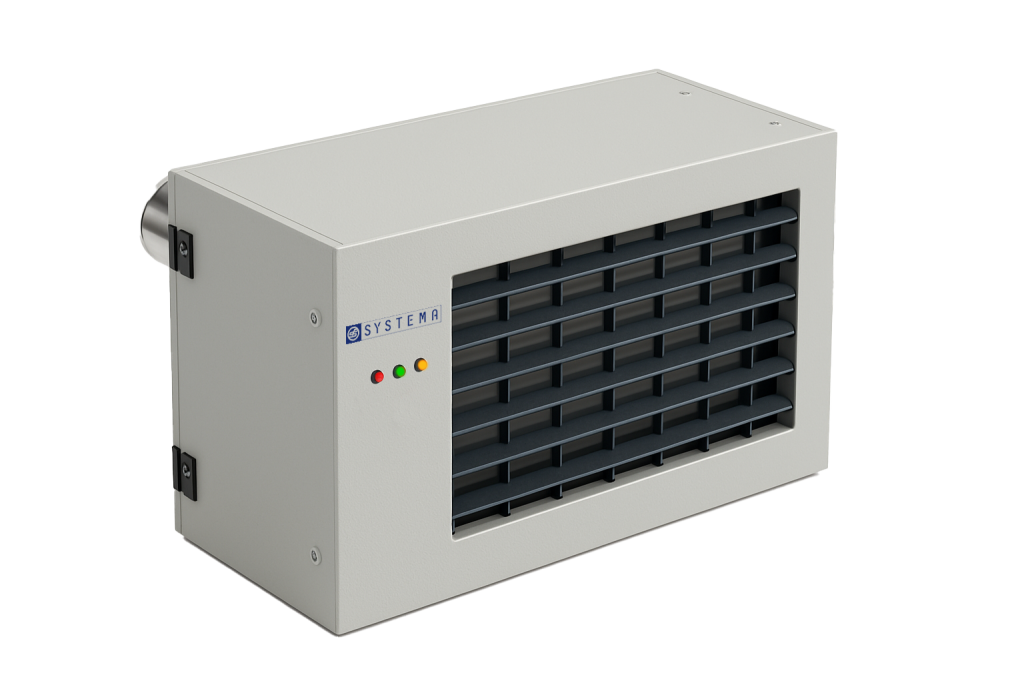
Forced-air heating (gas heaters)
How it works: A gas heater warms the air and circulates it using a fan. In warehouses with a height of up to 8–10 metres, the warm air can be effectively controlled.
Advantages in warehouses:
- quick warm-up after an overnight standstill,
- consistent comfort in the order-picking areas,
- low running costs when using natural gas.
Restrictions: SV curtains are required where gates are opened frequently; above 12 metres, heat accumulates near the ceiling.
Product: gas heaters EOLO BC / NBC / BCX.
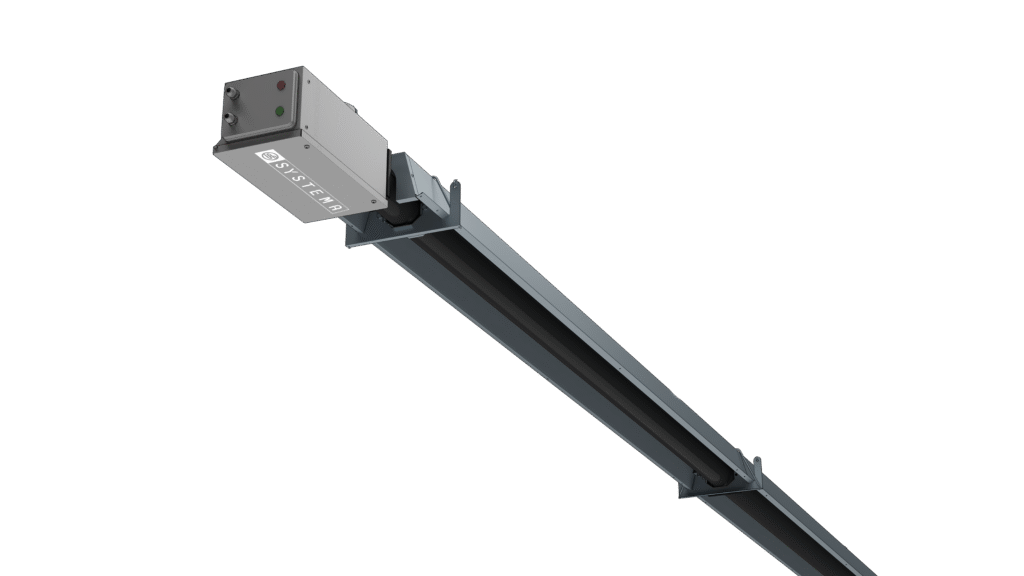
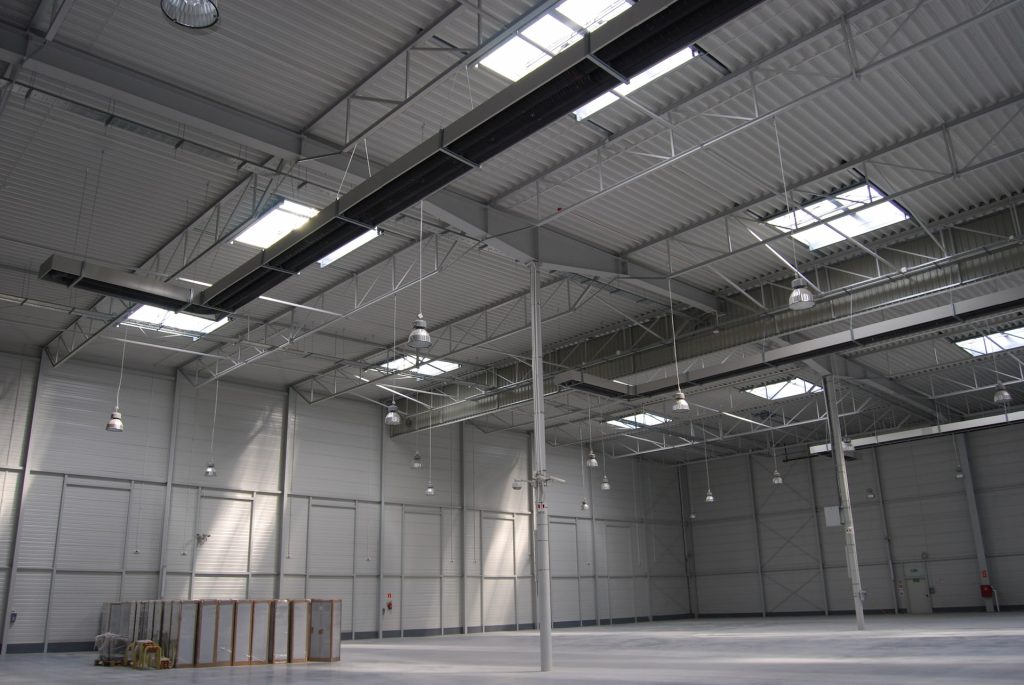
Infrared heating (radiators, radiant panels)
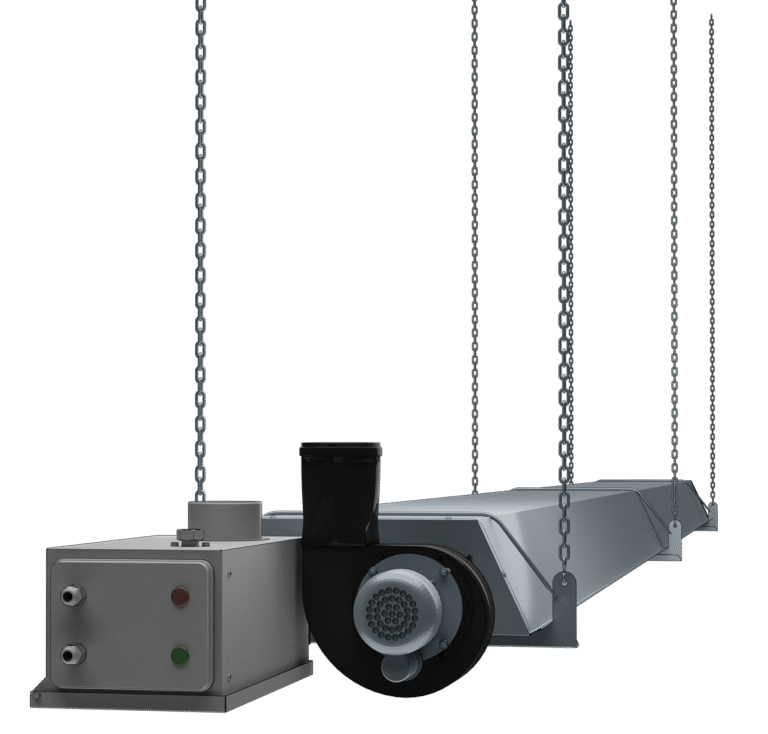
How it works: Infrared waves heat people, the floor and objects — not the entire volume of air.
Advantages in warehouses:
- zonal heating (assembly area, offices in the hall),
- instant comfort as soon as you switch it on,
- no air movement, less dust,
- It works well in larger halls.
Restrictions: It does not heat the entire volume on its own; it requires further analysis where there are a large number of shelving units.
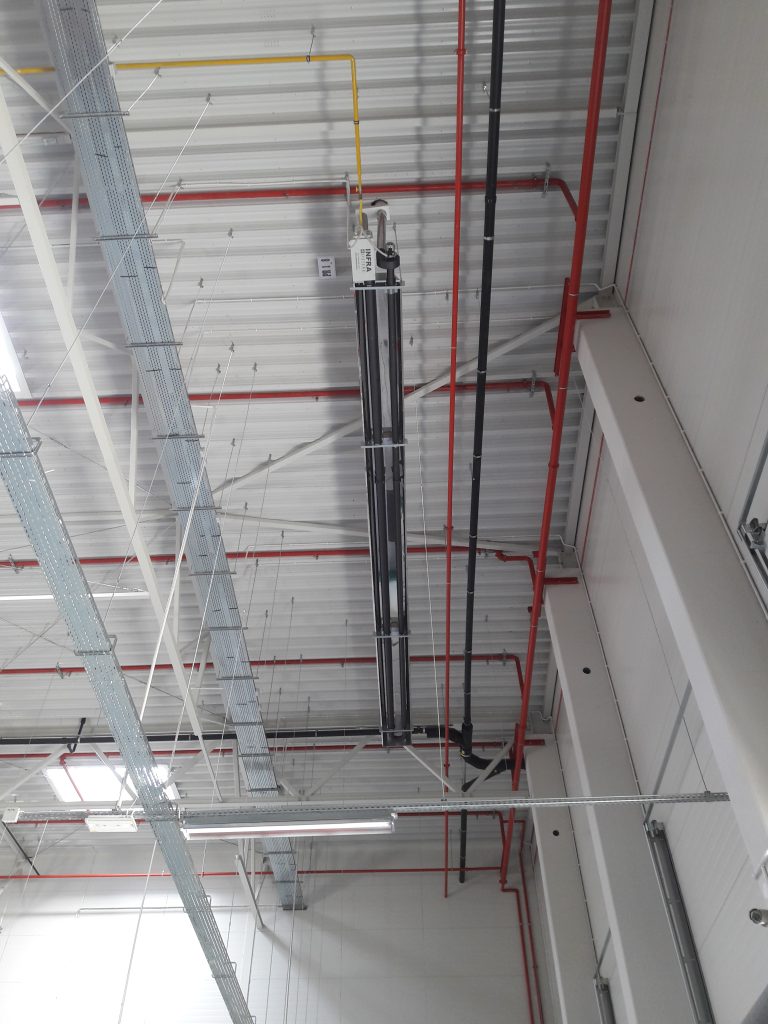
Products: INFRA BU/BM, OHA / OHA X lanes.
Destratification and air curtains at the gates
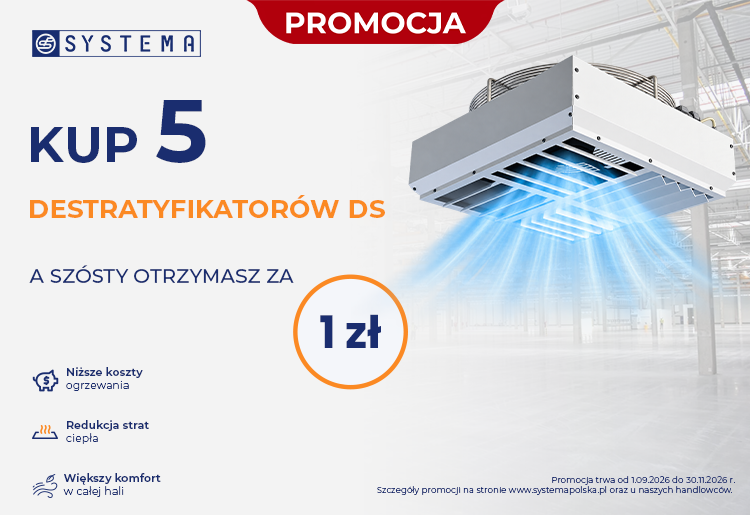
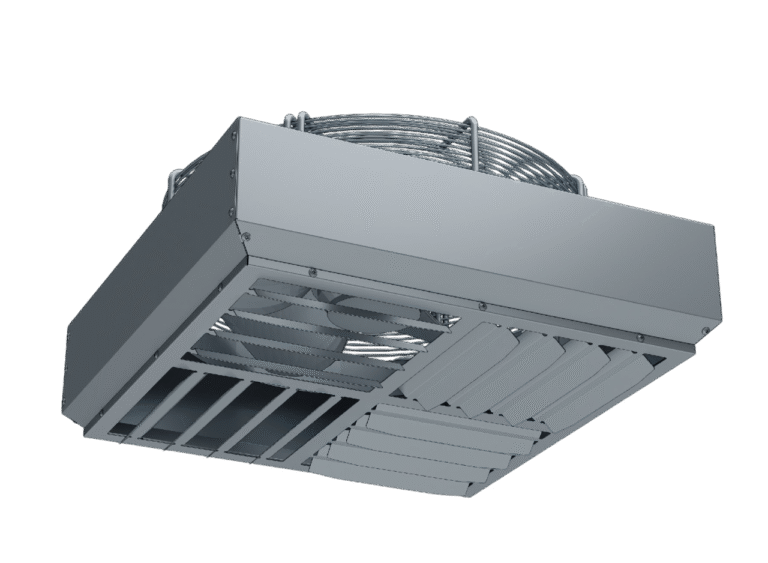
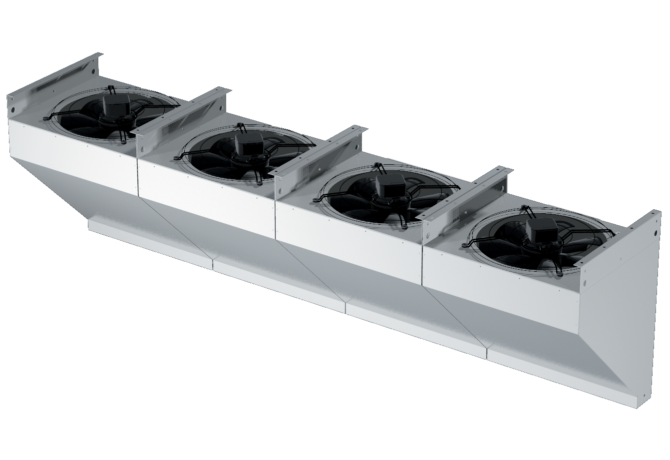
In warehouses, these two factors are usually the deciding factors when it comes to invoicing. Destratification DS It regulates the temperature and can reduce heating costs by 20–30% in halls over 8 m high. Air curtain SV reduces losses at loading bays and draughts in the loading area.
They do not replace the heaters — they complement them. A typical setup: EOLO + SV + DS.
A comparison of solutions for gates and docks in industrial halls
How much does an air curtain cost for a hall?
Capital expenditure
Purchase of equipment (heaters, radiant heaters), design and installation, air curtains and destratifiers, gas and electrical installations. The cost depends on the floor area, the number of doors and the technology chosen air curtains for industrial halls.
Running costs
Gas consumption, heat loss through doors (without SV curtains) and maintenance account for the largest share of costs. When the system is correctly designed, the EOLO system is one of the most cost-effective solutions for large logistics facilities in terms of maintenance.
Indirect costs
Slower order picking in cold weather, staff absences in the loading area, damage to frost-sensitive goods, and operational downtime during the winter peak period.
Fast and even heat in the warehouse: EOLO gas heaters
A tried-and-tested solution for warehouses and logistics centres with a height of up to 8–10 metres.
EOLO heaters ensure rapid heating after an overnight standstill and a stable temperature in the picking areas.
Key parameters:
- Condensation (BC series) — capacity up to 105%.
- PREMIX burner — low NOx emissions, Class 5.
- Indoor and outdoor installation — including Roof-Top EOLO RT.
- Modulation 30–100% — The machine uses only as much fuel as it needs.
+25,000.
+1000
Precise heating in order-picking areas: INFRA radiant heaters and OHA heating strips
Ideal for zone heating in a warehouse — order picking, offices within the warehouse, and workstations at the loading bays.
Infrared waves heat people, the floor and objects, but not the entire space. The warmth is felt immediately, without stirring up dust.
Key benefits:
- Zone heating — You’re heating the order-picking area, not the whole warehouse.
- Instant comfort as soon as it is switched on, without the hall taking a long time to heat up.
- No air movement — less dust on the goods.
- Scalability: radiators INFRA BU/BM and belts OHA / OHA X.
+25,000.
+1000
Warehouse heating — from small storage facilities to logistics centres
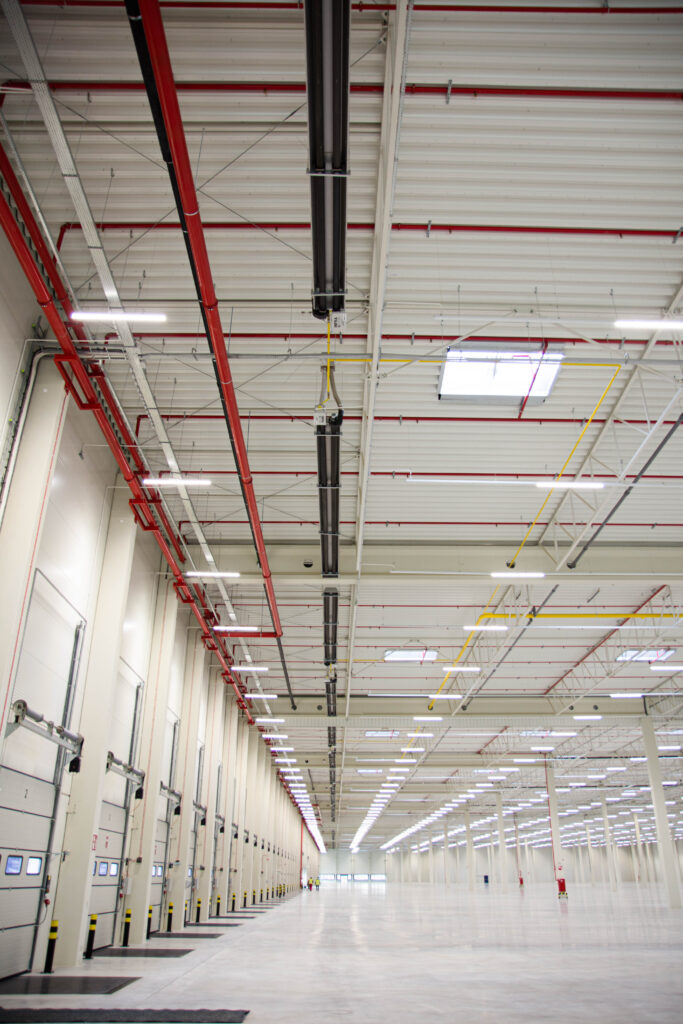
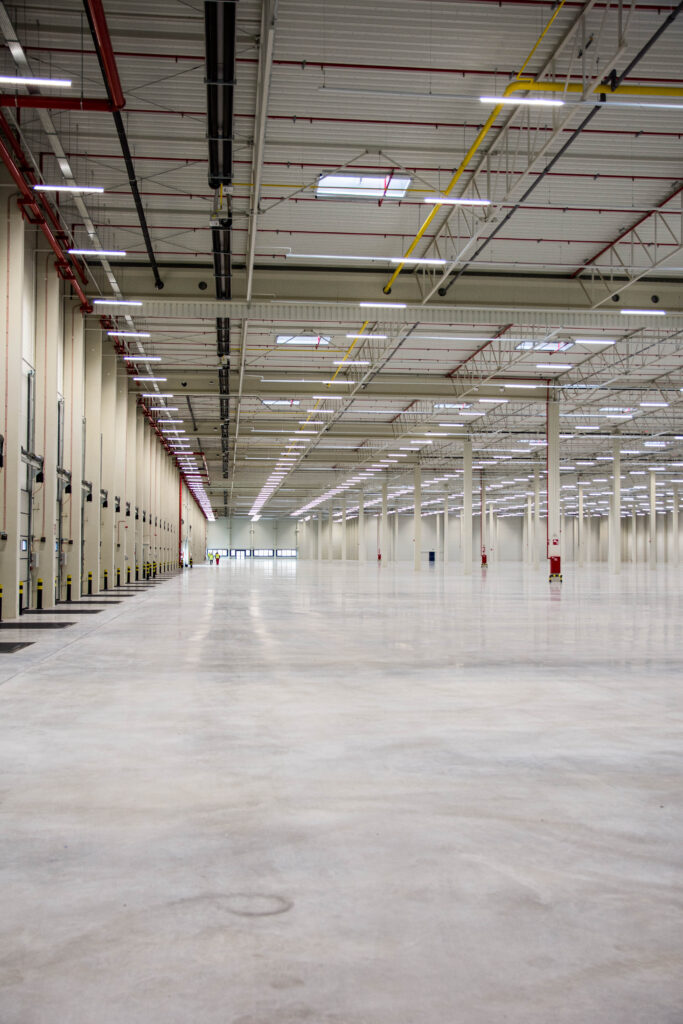
Heating for distribution centres It requires particular attention due to the heavy traffic around loading bays, order-picking areas, temperature-sensitive goods (often requiring a minimum temperature of 10–15°C) and the height of the racking. In high-bay warehouses over 10 metres high, destratification is practically essential.
In practice air curtains for industrial halls It usually combines several technologies:
- EOLO heaters as the main source of heat,
- SV curtains at loading bays,
- DS destratifiers in halls with a larger volume,
- INFRA/OHA heaters in order-picking areas or warehouse offices.
Warehouses vs production halls — how do they differ?
| Feature | Warehouse | Production hall |
|---|---|---|
| The main source of heat loss | doors, windows, water ingress | machinery, manufacturing processes |
| Height | usually 8–12 m | often 8–15 metres or more |
| Priority | convenience at loading bays, protection of goods | processes, health and safety, production quality |
| A typical system | EOLO + SV curtains + DS | EOLO or INFRA/OHA (by zone) |
| Seasonality | winter summit | all year round |
If you’re looking for a solution for a production hall, take a look at: heating of production halls.
SV air curtains and DS destratifiers — an essential addition
Where there is heavy logistics traffic SV air curtains are practically indispensable. They create a barrier that minimises heat loss and improves comfort in the ramp area.
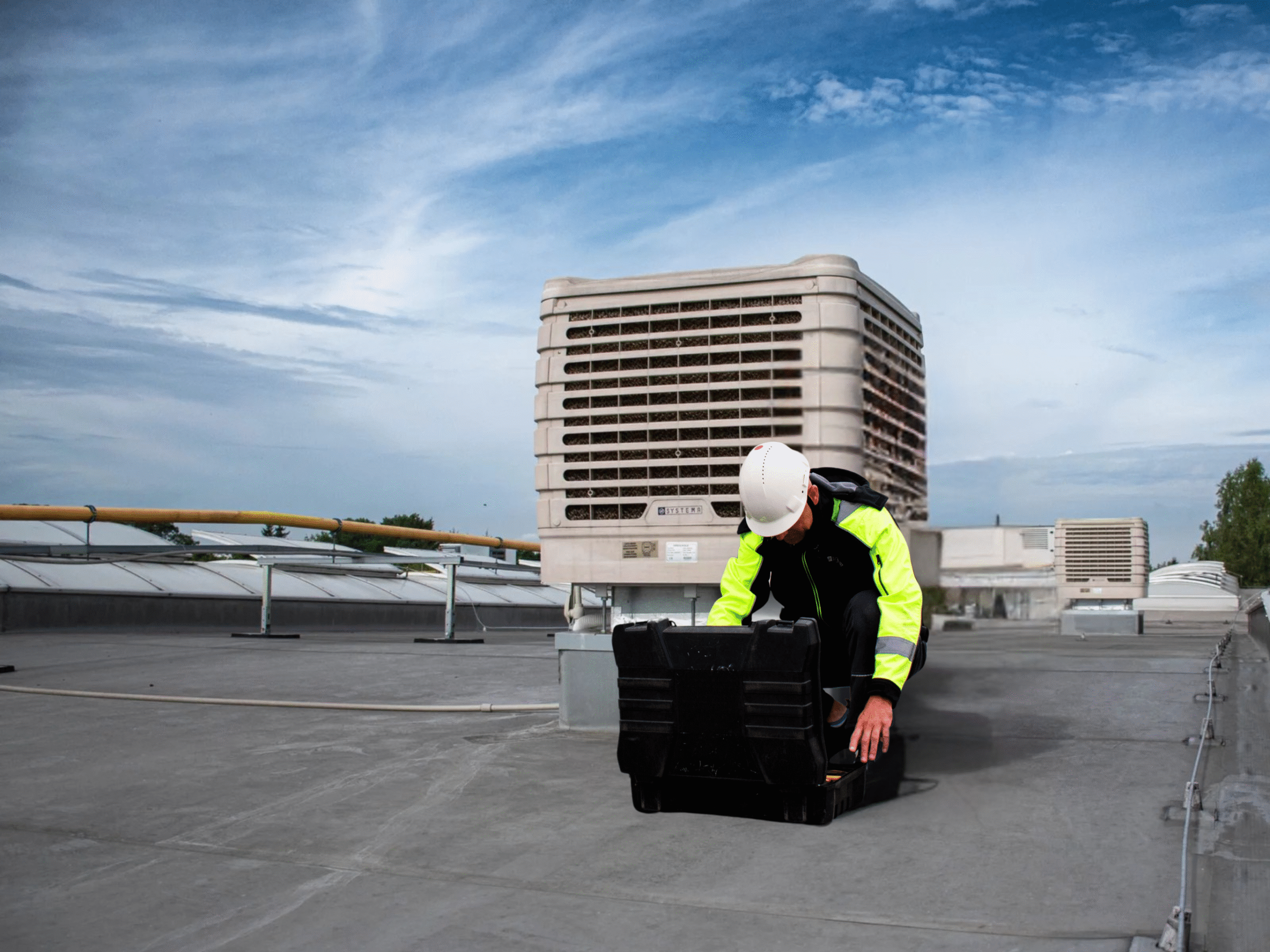
In halls over 8 metres high DS destratifier It regulates the temperature and can reduce heating costs by up to 30%.
When is it worth commissioning a project from a company?
A professional design for SV air curtains is particularly important when:
- the warehouse has over 3,000 m² and numerous loading bays,
- temperature-sensitive goods are stored,
- there are plans to extend the hall or change its use,
- the current system results in high bills or uneven temperatures,
- The investor wants to compare the costs of the technologies before making a decision.
Systema Polska offers a free technical audit and a proposal including a calculation of potential savings.
How do you choose a heating system for a warehouse?
The selection should take into account the floor area and height, the number of doors, the type of goods, the location of the work areas, the budget and the availability of gas.
In practice The best results are achieved by combining several systems:
- EOLO heaters + SV air curtains,
- EOLO heaters + DS destratifiers,
- OHA radiant heaters in this section, and EOLO in the rest of the hall.
The most common mistakes when heating warehouse buildings
- Selection based solely on surface area — no gates or work zones.
- No curtains during heavy loading — the most common cause of high bills.
- Ignoring destratification in high-ceilinged halls — the heat stays near the ceiling; it’s cold by the ramps.
- One system for the entire warehouse — without distinguishing between picking and storage.
- No analysis of the type of goods — Not every warehouse requires the same temperature.
- Cost savings on the project — A poorly chosen system ends up costing more over the years.
- Lack of regular servicing — a decline in performance due to a lack of servicing.
Frequently Asked Questions
When is an air curtain suitable for a warehouse or production hall?
How much does an air curtain for an industrial hall cost?
Does an air curtain replace the hall’s heating system?
How do you match the power of an SV curtain to the width of the door?
Does an air curtain heat the interior of a warehouse?
From audit to service, we are your partner at every stage.
Free technical audit
Design and selection of equipment
Professional installation
Commissioning and maintenance
Over 27 years’ experience. Thousands of halls. Hundreds of satisfied customers.
Get a free quote for an SV curtain
Długa street 5, 98-220 Zduńska Wola
NIP: 829-150-55-41
REGON: 730918997
KRS: 0000102157
Monday to Friday
from 7:00 a.m. to 3:00 p.m.
Fill in the form