Intelligent heating for production halls
Tired of high costs and erratic hall temperatures? Ensure stable working conditions and stop overpaying. An investment in a modern heating system pays off faster than you think.

Precise zone heating

Instant thermal comfort
Scalable solutions
Do these challenges sound familiar? We have proven recipes for them.
The problem: Giant gas or oil bills are eating into your profits.
The problem: Workers at the outer walls are freezing and useless, expensive heat is building up under the ceiling.
Problem: Every time the door is opened, it causes rapid cooling and energy loss.
Why is heating a production hall such a challenge?
Maintaining the correct temperature in a production hall affects staff comfort, the quality of manufacturing processes and the actual operating costs of the entire plant. Large-volume halls, often ranging from 5,000 to 30,000 m³, lose heat differently to office buildings: heat loss through loading bays, structural leaks and heat gains from machinery mean that selecting a heating system requires a thorough analysis, rather than simply taking the floor area into account.
Low or uneven temperatures in the production hall lead to a drop in staff productivity, product quality issues and higher energy bills, even when modern equipment is used that is poorly suited to the facility.
Methods of heating production halls – a comparison of solutions
Infrared heating (INFRA radiators, OHA heating strips)
Rule: Infrared waves heat people, machines and the floor, but not the entire volume.
Pros:
- instant comfort,
- zone heating,
- lack of air circulation (paint shops, joinery workshops, food processing).
Restrictions:
- it does not heat the entire volume,
- requires an analysis of the layout in the case of large halls.
Forced-air heating (EOLO gas heaters)
Rule: heated air distributed throughout the hall by a fan.
Pros:
- rapid heating of the entire space,
- uniform temperature,
- low running costs when using gas.
Restrictions:
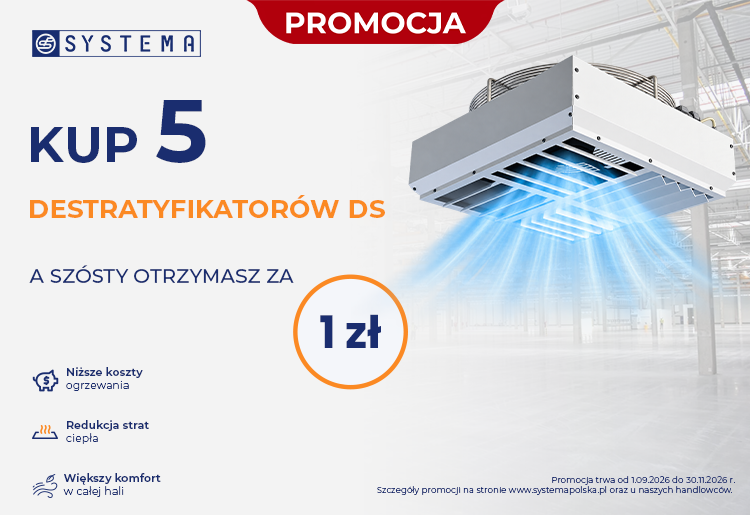
- Heat rises; in halls over 8 m high, it is advisable to install DS destratifiers.
Hybrid systems
The combination of radiant heaters in work areas with EOLO heaters in the rest of the hall is a common choice in large facilities with a varied layout of workstations.
Comparison of systems (table)
How much does it cost to heat a production hall?
Capital expenditure
Heating equipment, design, installation, auxiliary equipment (DS, SV), gas or electrical installation. These depend on the floor area, the height of the hall and the chosen technology.
Running costs
Mainly gas consumption, heat loss through the doors (without SV curtains), and maintenance. With a correctly selected EOLO + DS system, this is usually the cheapest operating option for large halls.
Indirect costs
Absenteeism due to the cold in the hall, slower production, quality complaints, and downtime during the peak heating season.
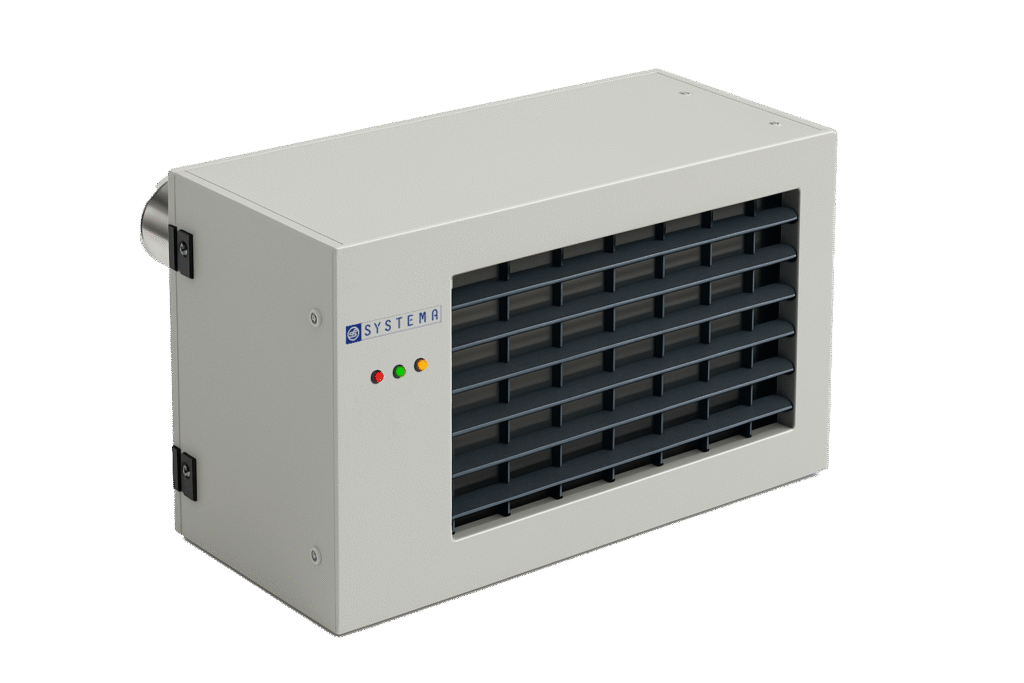
Fast and even heat throughout the hall: EOLO gas heaters
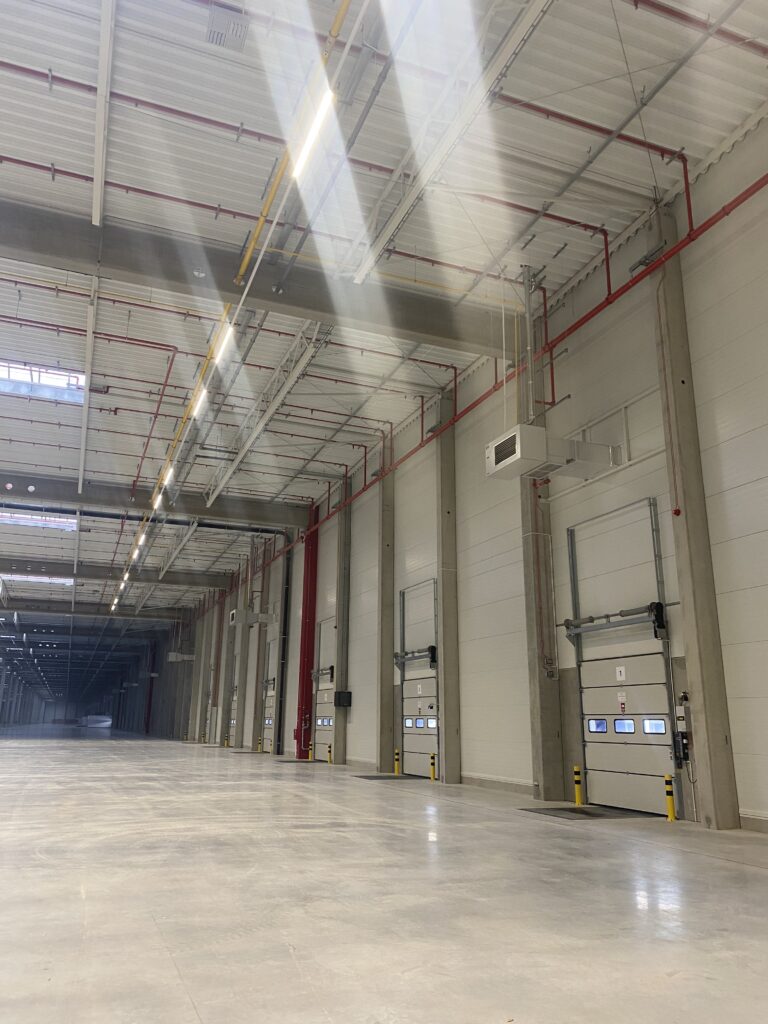
Ideal for rapid and even heating of entire buildings, especially those up to 6-8 metres high.
EOLO heaters are synonymous with efficiency and reliability. They inject warm air into the hall, instantly raising the temperature and maintaining it at the desired level.
Key benefits for your business:
- Maximum performance, minimum consumption: Thanks to condensation (BC series) we recover additional energy from the flue gases, which directly reduces bills.
- Clean and safe combustion: The PREMIX burner guarantees the highest NOx emission class 5 and zero carbon monoxide (CO) emissions. This is an investment in employee safety and environmental compliance.
- Full assembly flexibility:
Internal assembly: Models EOLO BC/NBC AE (with axial fan for free blowing) and EOLO BC/NBC AC (with centrifugal fan, ideal for use with textile ducts).
Outdoor installation (saves space in the hall): Roof-top units EOLO RT or MIX mounted on the roof or against the wall of the building.
+25,000.
+1000
Precise heat where you need it: INFRA radiant heaters
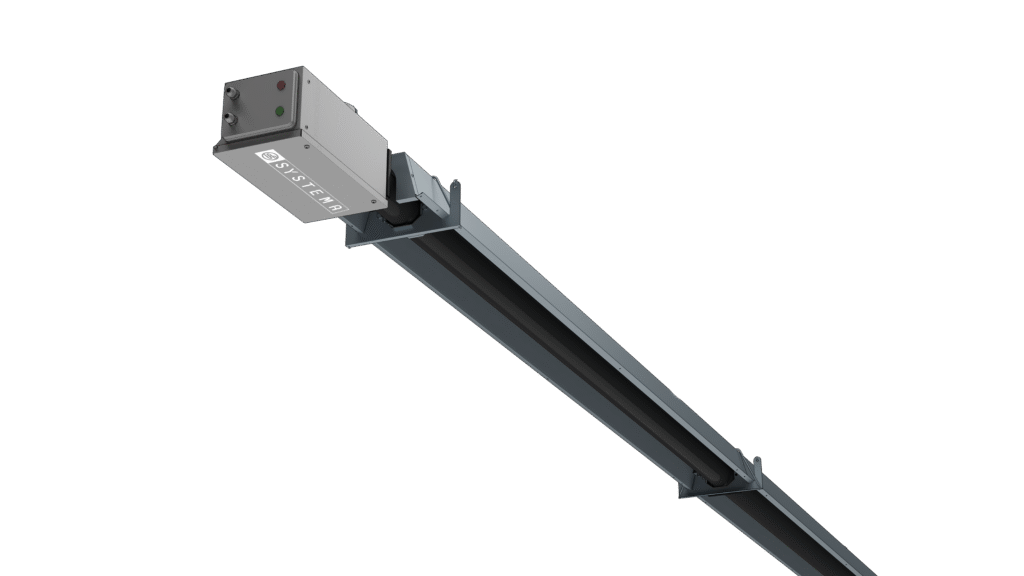
The most effective solution for high halls (above 6m) and for zone heating.
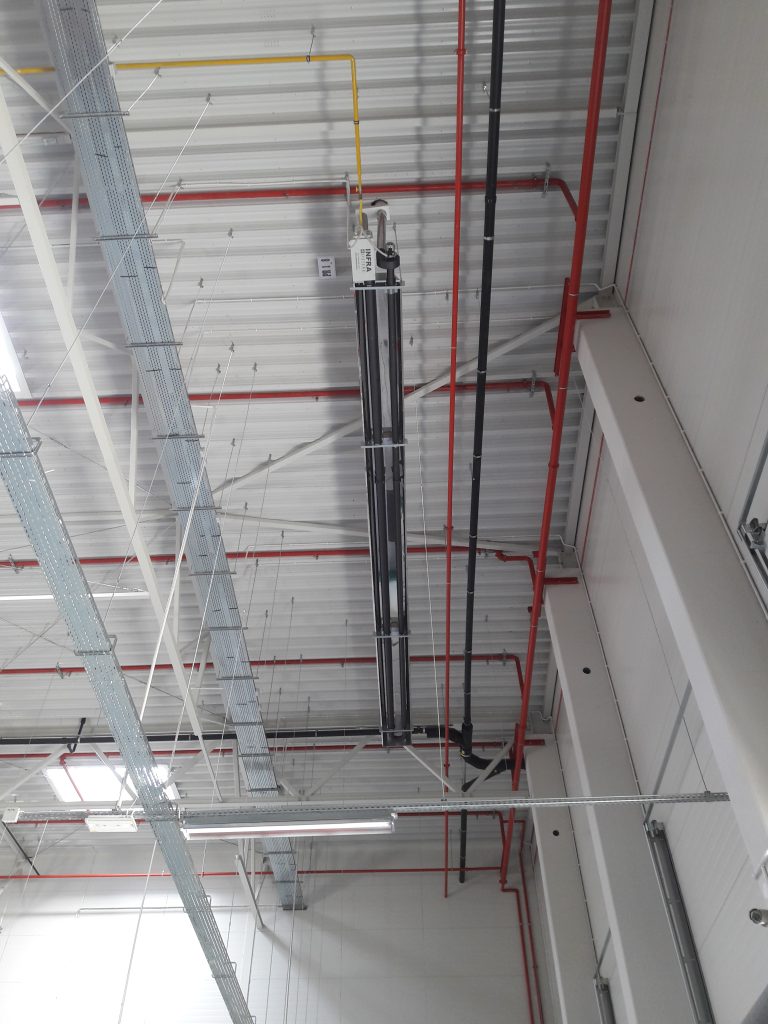
Radiant heaters work like the sun - they do not heat the air, but people, machines and the floor directly. The heat is felt immediately, exactly where it is needed.
Key benefits for your business:
- Precision zone heating: Heat only the active workstations, not the thousands of cubic metres of air below the ceiling. This generates the greatest savings in tall buildings.
- Instant thermal comfort: Employees feel the heat almost as soon as the system is activated, without the need to heat up the entire hall for a long time.
- Ideal for specific industries: No air movement means no dust, dirt or vapours rising, which is crucial in paint shops, carpentry or the food industry.
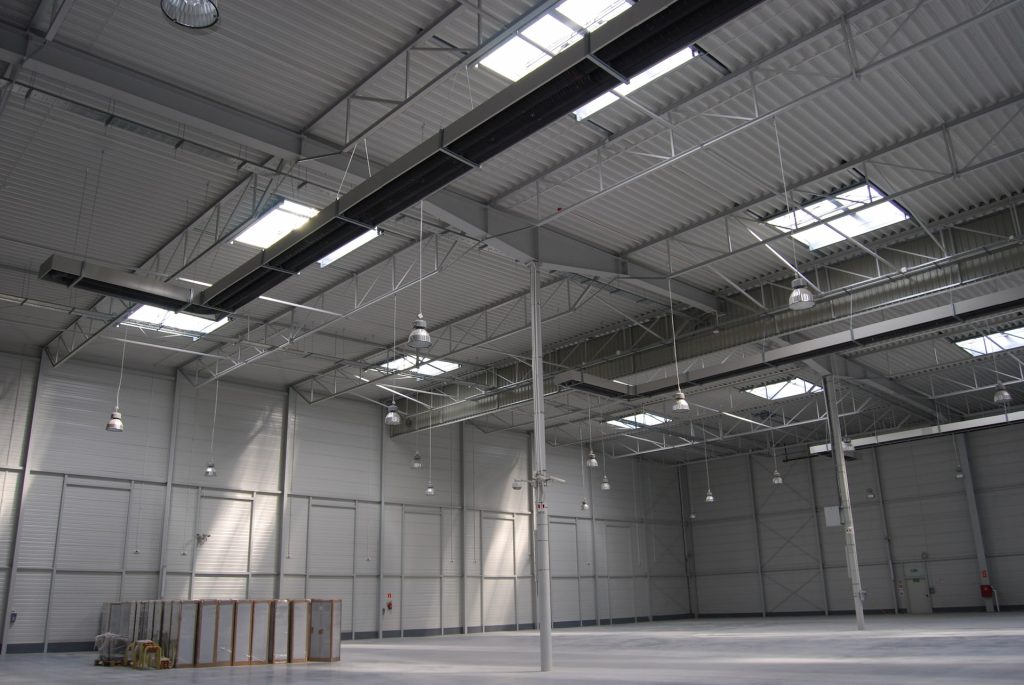
- Scalable solutions: We offer both single radiant tube heaters INFRA BU/BM, as well as integrated, multi-metre OHA radiating strips for the largest facilities.
+25,000.
+1000
How do you choose a heating system for a production hall?
The choice of technology should take into account:
• the volume and height of the hall,
• the type of production processes and heat recovery from machinery,
• the number of gates and how often they are opened,
• health and safety requirements and industry standards,
• investment and operating budget (TCO, not just the price of the equipment).
Practical rule: halls up to 8 m → often EOLO; high-ceilinged and zoned halls → INFRA/OHA; for any height above 8 m → add DS destratifiers; where there is heavy traffic at the doors → SV air curtains.
If the property is a warehouse or a logistics centre, see heating of warehouse buildings.
The most common mistakes made when heating production halls
- Selecting a unit based solely on floor area — without taking into account ceiling height and doorways.
- No destratification in high-ceilinged halls — the heat „hangs” near the ceiling.
- No SV curtains when gates are opened frequently.
- A single system for the entire hall — with no division into production zones.
- Saving money on the project — a poorly chosen system ends up costing more to run over the years.
- Lack of regular servicing — reduced performance and increased emissions.
Frequently Asked Questions
What type of heating works best in a production hall?
How much does it cost to heat a 5,000 m² production hall?
How does infrared heating differ from forced-air heating?
Does the DS destratifier replace heating?
Does the SV curtain replace the heating at the gate?
From audit to service, we are your partner at every stage.
Free Technical Audit
Design and Selection of Equipment
Professional installation
Commissioning and Service
Over 27 years' experience. Thousands of heated halls. Hundreds of satisfied customers.
Receive a free savings calculation for your hall!
Długa street 5, 98-220 Zduńska Wola
NIP: 829-150-55-41
REGON: 730918997
KRS: 0000102157
Monday to Friday
from 7:00 a.m. to 3:00 p.m.
Fill in the form