Systema Polska

Heating industrial halls, warehouses or workshops is a key element in ensuring working comfort and optimal storage conditions for goods. In Poland, where winter temperatures can be very low, choosing the right heating system is of paramount importance. In this article, we compare infrared heaters and traditional heating systems such as water heaters, air heaters and air curtains.
You can read more about choosing systems on the website heating of production halls.
Infrared radiant heaters work by emitting radiation that heats objects and people directly, rather than the air. This is an effective way of heating large spaces, as it minimises heat loss and allows for spot heating of areas where employees are present.
Water radiators are a standard component of central heating systems, but their effectiveness in large halls is limited due to high heat losses.
Air curtains help maintain the temperature inside the building by reducing heat loss at entrances and gates.
Gas continues to be the cheapest and most efficient source of heat, while meeting Ecodesign requirements. Gas infrared heaters and gas heaters are ideal solutions for industry, guaranteeing high efficiency and low operating costs.
The use of radiant gas heaters in storage halls brings benefits not only in terms of thermal comfort, but also in terms of economy and ecology.
The choice of the appropriate system depends on the specifics of the building, the availability of utilities and the expected operating costs. The most efficient way of heating cubic buildings is to combine radiant heating with supply heating. This makes it possible to take advantage of the most important aspects of infrared radiation, such as:
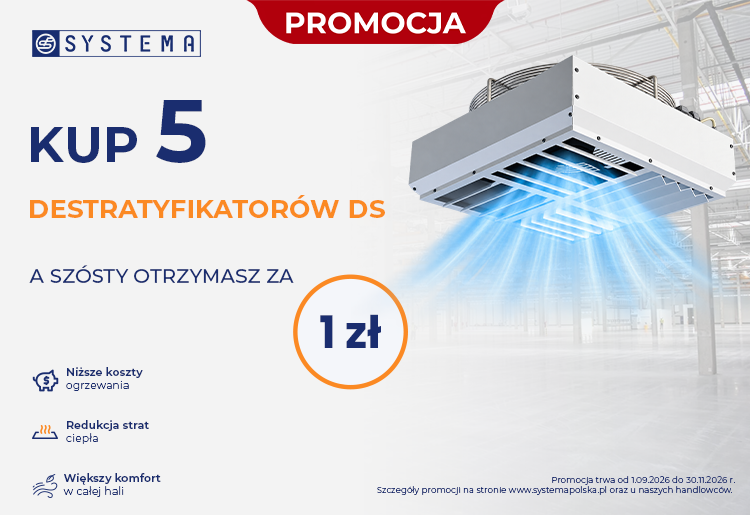
It is good when the heating system is complemented by destratifiers, whose main function is to force air from the upper zones of the heated room towards the floor. The warmer air is transported to the occupied zone to increase people's comfort. The use of destratification devices makes it possible to achieve even to 30% energy savings.
Ideally, the heating system should be complemented by air curtains. They reduce the exchange of air between the room and the outside environment. This prevents heated air from escaping from the room, e.g. through the open during loading of goods, which significantly reduces heat loss.
Find out more about heating systems for industrial halls on our website, a Our experts will be happy to assist you in designing your heating system and selecting equipment. Find out how we can help you heat your hall - contact us!
nRelated solution
Find out about our range of technologies, examples of implementations and a free site audit.